Last updated: August 16, 2026
A loud bang somewhere in the walls right after a faucet shuts off is startling the first time it happens, and it has a name: water hammer. It sounds worse than it usually is, but the shock wave behind that noise is real, and over time it can loosen fittings and stress joints if nothing addresses it.
This guide explains what actually causes water hammer in pipes, why it often shows up right after a washing machine or dishwasher fills, and how to fix water hammer with anything from a five-minute reset to a small part installed at the source.
Quick Answer
Why do my pipes bang and vibrate?
- Water hammer happens when a valve closes quickly and the moving water behind it has nowhere to go, creating a pressure shock that slams against the pipe.
- It commonly shows up right after a washing machine, dishwasher, or fast-closing faucet shuts off.
- Air chambers built into older plumbing can waterlog over time and stop absorbing the shock, which is a common reason banging returns in a home that used to be quiet.
What Causes the Banging
Water moving through a pipe has momentum, and when a valve slams shut, that moving column of water has to stop almost instantly. Since water does not compress, the energy has to go somewhere, and it travels back through the pipe as a pressure wave that can spike well above normal operating pressure for a fraction of a second. That shock hitting a valve, fitting, or a loose section of pipe is what you hear as a bang or feel as a vibration.
| Trigger | Why it happens | Typical fix |
|---|---|---|
| Washing machine or dishwasher solenoid valve | These valves close almost instantly at the end of a fill cycle | Arrestor installed at the appliance’s supply connection |
| Fast-closing faucet or lever handle | Quick shutoff stops the water column abruptly | Arrestor near the fixture, or a slower-closing valve |
| Waterlogged air chamber | Water has displaced the air that used to cushion the shock | Drain the system to let chambers refill with air |
| Loose pipe straps or hangers | Nothing is holding the pipe still against the pressure wave | Secure loose sections with new straps or clamps |
| High static water pressure | Higher baseline pressure makes any shock more forceful | Pressure-reducing valve to bring pressure into a normal range |
Resetting Waterlogged Air Chambers
Older homes were often built with air chambers, short capped sections of pipe near fixtures that hold a pocket of air to absorb pressure shocks. Over time, water gradually dissolves into that trapped air and takes its place, and once the air is gone the chamber stops doing its job, which is one of the most common reasons banging pipes show up in a house that was previously quiet.
The fix is often as simple as shutting off the main water valve, opening the highest and lowest faucets in the house to drain the system, then closing them and turning the main valve back on. As the pipes drain, the air chambers refill with air on their own, and the banging frequently stops without replacing anything.
When a Water Hammer Arrestor Is the Better Fix
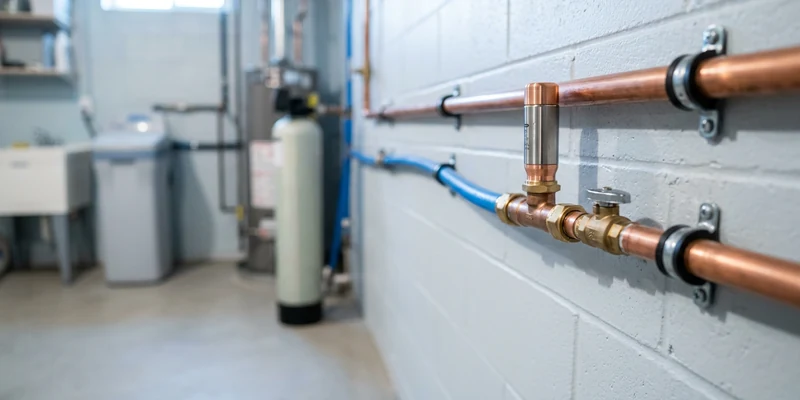
If your plumbing does not have air chambers, or the drain-and-refill reset does not solve it, a water hammer arrestor is the more permanent solution. It is a small sealed device with a spring-loaded piston or an air-filled bladder that absorbs the pressure shock the same way an air chamber does, but it is self-contained and does not waterlog over time the way an open air chamber does.
Arrestors are installed close to the source of the noise, which is often right at a washing machine or dishwasher connection, where they can typically be screwed directly onto the supply line without opening a wall. Banging that traces back to a specific fixture rather than the whole house is a good sign an arrestor at that location will solve it.

When It Points to a Bigger Pressure Problem
Water hammer that shows up throughout the house rather than at one fixture is sometimes a sign that static water pressure is running higher than it should. A pressure-reducing valve brings the baseline down into a normal range and can noticeably reduce how forceful any given pressure shock feels, on top of being easier on fixtures and appliances generally.
If banging pipes are showing up alongside pressure that feels inconsistent or noticeably low at times, that combination is worth a closer look rather than treating them as separate issues. Our guide to low water pressure on a well covers the pressure side of that overlap in more detail.
Tracking Down Where the Noise Is Coming From
Before buying anything, it helps to figure out whether the banging happens throughout the house or only when a specific fixture or appliance is used. Run each major water user, the washing machine, dishwasher, and individual faucets, one at a time and listen for where the sound is loudest. A bang that only follows the washing machine points you straight to that supply line, while noise that happens no matter which faucet you shut off suggests a house-wide pressure issue instead.
Walking the accessible sections of pipe, in a basement or crawlspace, while someone runs the fixture that triggers the noise can also help locate a specific loose section that is amplifying the sound against a joist or wall. Marking that section for a new strap or clamp is often a small, inexpensive fix on its own.
Water Hammer in Homes With a Well System
Households on a well sometimes notice water hammer that correlates with the pump cycling on and off, rather than only with a fixture shutting. A pressure tank that is waterlogged or undersized for the household’s demand can contribute to sharper pressure swings each time the pump kicks on, which shows up as banging in addition to whatever fixture-related causes are also present. This is a case where the fix may involve the pressure tank itself rather than just an arrestor at a fixture.
If the banging seems tied to pump cycles rather than appliance use, it is worth having the pressure tank and switch checked as part of the diagnosis, since treating only the plumbing side may not resolve noise that is actually originating at the pump.
Common Mistakes to Avoid
- Ignoring occasional banging as harmless. It usually is minor, but repeated pressure shocks over years can loosen fittings and joints.
- Assuming every case needs a new arrestor. Try the drain-and-refill reset for waterlogged air chambers first; it costs nothing and often works.
- Overlooking loose pipe hangers. A pipe that can move against a joist will bang even with proper pressure control upstream.
- Treating whole-house banging the same as a single-fixture issue. Widespread hammer often points to high static pressure, not just one valve.
- Skipping arrestors on new appliance installs. Modern solenoid valves close fast enough that hammer shows up even in newer homes.
Frequently Asked Questions
Is water hammer dangerous? A single bang is not an emergency, but repeated pressure shocks over time can stress joints, loosen fittings, and in rare cases contribute to a leak. It is worth addressing rather than ignoring long term.
Why does my washing machine cause pipes to bang? Washing machines use a solenoid valve that closes almost instantly at the end of the fill cycle, which creates a sharp pressure shock. An arrestor installed at the machine’s supply connection is the typical fix.
How do I fix water hammer without calling a plumber? Try draining the system by shutting off the main valve and opening the highest and lowest faucets in the house, which lets waterlogged air chambers refill with air. If that does not solve it, an arrestor installed at the noisy fixture is the next step.
Can high water pressure cause water hammer? Yes, higher static pressure makes any pressure shock more forceful. A pressure-reducing valve that brings pressure into a normal range often reduces or eliminates the banging.
Do all houses have air chambers? Older homes commonly do, built as short capped sections of pipe near fixtures. Newer construction sometimes uses arrestors instead, since they do not waterlog the way open air chambers can.
Is vibrating pipes the same problem as water hammer? Often, yes. The same pressure shock that causes a bang can also show up as a rattle or vibration, especially if a pipe section is not well secured against a joist or wall.
The Bottom Line
Water hammer is a pressure shock caused by a valve closing quickly, and it most often shows up right after a washing machine, dishwasher, or fast-closing faucet shuts off. Try draining the system to reset waterlogged air chambers first, add an arrestor at the source if that does not solve it, and consider a pressure-reducing valve if the banging is widespread rather than tied to one fixture.