Last updated: August 16, 2026
A water softener, or a whole house filter sitting next to it, is easy to forget about once it is installed and running, which is exactly how small issues turn into bigger ones. Water softener maintenance is not complicated, but it does need a routine: checking the brine tank, swapping cartridges on schedule, keeping the resin clean, and occasionally sanitizing the system, especially after well work or a contamination event.
This guide covers the ongoing tasks that keep a treatment system working the way it was designed to, laid out as a year-round rhythm so the work is spread out instead of piling up, without guessing at schedules your specific unit was not built around.
This article contains affiliate links. If you buy through them, we may earn a commission at no extra cost to you. Learn more.
Quick Answer
What does water softener maintenance actually involve?
- Monthly brine tank checks for salt level, bridging, and mushing, following whatever schedule your manufacturer recommends.
- Sediment and carbon cartridges replaced every few months, and a deeper annual check of resin performance and injector cleanliness.
- Sanitizing the system when your manufacturer’s manual calls for it, such as after well repairs, flooding, or a positive bacteria test.
- An annual retest of your water to confirm hardness and other parameters have not shifted.
Water Softener Maintenance Tasks at a Glance
Use this as a starting checklist, then confirm exact timing against your unit’s manual, since schedules vary by manufacturer, resin volume, and water conditions.
| Task | How often | Why it matters |
|---|---|---|
| Check brine tank salt level | Monthly | Confirms the tank has enough salt to make brine for regeneration |
| Look for salt bridging or mushing | Whenever you check salt level | Bridges and mush block dissolving, silently stopping regeneration |
| Replace sediment and carbon cartridges | Every 3 to 6 months | A loaded cartridge restricts flow and stops filtering effectively |
| Clean resin bed | As needed, or per manufacturer schedule | Clears iron, sediment, or organic fouling that reduces softening capacity |
| Inspect venturi/injector, retest water | Annually | Catches a clogged injector or shifting hardness before it becomes obvious |
| Sanitize the system | After contamination events or per manufacturer guidance | Addresses bacterial growth that can occur inside tanks and resin |
Routine Checks: Brine Tank and Salt Level
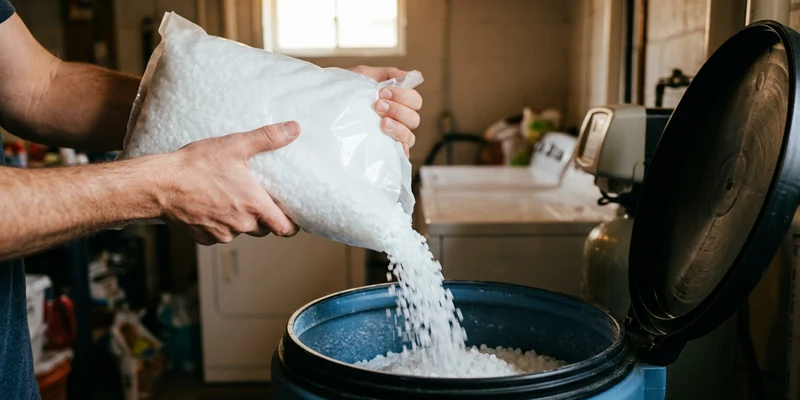
Salt or potassium chloride levels are the easiest thing to let slip, since a softener will keep running for a while even as the level drops, right up until it cannot regenerate properly. Check the brine tank monthly and top it off before it runs low, and while you are there, confirm the salt looks loose rather than crusted or clumped. Our guide to water softener salt bridges covers how to spot and clear that specific problem in more detail.
Beyond salt, keep an eye on how your water performs day to day. A gradual return of scale, soap that stops lathering well, or spotting on dishes are all practical signals that something in the system needs attention before you get to a scheduled check.

The Annual Water Treatment Maintenance Schedule
Beyond the monthly salt check, a water softener maintenance schedule works best when it is spread across the year rather than treated as a single appliance’s to-do list. A typical household setup includes a softener, sediment or carbon filtration, and, on a well, the pump and pressure equipment behind it, so it helps to think of the schedule as covering the whole treatment train.
| Frequency | Task | What to watch for |
|---|---|---|
| Monthly | Check salt or potassium level, inspect for bridging | A hard salt crust that traps an air gap above the water level |
| Every 3 to 6 months | Replace sediment and carbon filter cartridges | Follow the change interval printed on the cartridge or manual |
| Twice a year | Clean the brine tank, check the bypass valve operation | Sediment buildup at the bottom of the tank |
| Annually | Clean the injector, check resin performance, retest water | Rising salt use or hardness slipping back despite regular cycles |
| Seasonally | Inspect exposed piping and the pressure tank before winter | See our winterizing guide for freeze-specific prep |
Knowing how to maintain a water softener mostly comes down to following that rhythm instead of waiting for a symptom, and adjusting the frequency based on your household’s actual water use rather than a generic figure.
Cleaning Resin and the Venturi/Injector
Over time, resin can become fouled by iron, sediment, or organic material that plain regeneration does not fully clear, which gradually reduces how much softening capacity it actually has. A resin cleaner formulated for water softeners, used according to the product’s and your unit’s instructions, helps restore capacity without replacing the resin outright. Resin does wear out eventually, and how long does water softener resin last depends heavily on water quality: harder water, higher iron, or heavier chlorine exposure all shorten its working life, while a well-maintained system can keep resin performing for many years.
The venturi, or injector, is the small component responsible for drawing brine out of the salt tank during regeneration. If salt use looks unusually low despite a full tank and no visible bridge, a clogged or worn injector is worth checking. Together, resin cleaning and injector checks are the core of any how to clean water softener routine beyond the basic salt level check.

Cartridge Changes Across the Whole System
Sediment and carbon cartridges elsewhere in the treatment system have a finite capacity, and once they load up with particles or exhausted media, they stop doing their job even though water still flows through them. Manufacturers print a recommended change interval, usually every few months, but actual household water use and your water’s sediment load can shift that window shorter or longer. A noticeable drop in water pressure at the tap is one of the more common signs a cartridge needs swapping before its scheduled date, and keeping spares on hand turns it into a five-minute task instead of a delay while you order a replacement.
The core idea, checking and replacing on a schedule, applies across the system, but the specific tasks differ by component: a filter mainly needs cartridge changes, while the softener needs salt, bridging checks, and periodic resin evaluation.
Sanitizing a Softener (and When It’s Needed)
Sanitizing addresses bacterial growth that can build up inside the resin tank and brine tank over time, and it is typically called for after events like well repairs, flooding, a positive bacteria test on your water, or an extended period where the unit sat unused. Manufacturer manuals generally outline a specific sanitizing procedure, often using a small, precisely specified amount of unscented household bleach or a dedicated sanitizing product designed for the purpose.
This water softener sanitize procedure should follow the exact steps, amounts, and contact time in your unit’s manual rather than an approximate figure from a general guide. If your well water has tested positive for bacteria, coordinate with your local health department and a certified laboratory on next steps, since that is a water safety question that goes beyond softener maintenance alone.
Signs Your System Needs Attention
A few practical signals are worth acting on rather than waiting for a scheduled check: hardness symptoms returning despite a full salt tank, unusually low salt use over time, a musty smell from the brine tank, or a control head regenerating far more or less often than it used to. Each points toward a different likely cause, from a salt bridge to fouled resin to a settings mismatch.
If your household is also dealing with iron bacteria in well water, that specific issue can foul softening resin faster than plain hardness alone, which is worth ruling out if maintenance seems to help less than expected.
Seasonal and Well-Specific Considerations
Households on a private well have a couple of extra maintenance triggers beyond a standard schedule. After heavy rain, flooding, or nearby land disturbance such as new construction or drilling, check your softener alongside a broader well water test, since a shift in well conditions can change iron, sediment, or bacteria levels that affect how the system performs. Cold weather adds a seasonal layer on top of routine maintenance too, particularly for exposed piping and a well’s pressure tank if it sits in an unheated space; doing that prep in late fall, covered in our guide to winterizing water lines, keeps it from becoming an emergency task during a cold snap.
If your household leaves for an extended period, check your manufacturer’s guidance on whether to bypass the softener or let it continue regenerating on schedule while unused, since standing water in an idle system for a long stretch is one of the more common triggers for needing a sanitizing cycle when you return.
Keeping a Simple Maintenance Log
A short written log, even a single page taped inside a utility closet or a note on your phone, makes a surprising difference over the years. Jotting down the date of each salt refill, cartridge change, and annual check makes it easy to spot patterns, like salt use creeping up or cartridges needing replacement sooner than they used to, both worth a closer look rather than something you would only notice by comparing memory across seasons.
It also makes troubleshooting faster if something does go wrong. Knowing exactly when a cartridge was last changed or when the resin was last checked narrows down what to look at first, instead of starting from scratch every time.
Common Mistakes to Avoid
- Letting salt run completely empty. A softener cannot regenerate properly without enough salt in the brine tank.
- Checking the tank only when water suddenly feels hard again. By then, a bridge or fouling issue may have been building for a while.
- Ignoring the change interval on filter cartridges. A loaded cartridge restricts flow well before it looks visibly dirty.
- Guessing at a sanitizing schedule or bleach amount. Follow your unit’s manual rather than a generic online figure.
- Skipping the annual water retest and resin check. Hardness can shift over time, and declining resin performance is easy to miss without a scheduled check.
Frequently Asked Questions
How often is water softener maintenance needed? Salt checks are worth doing monthly, cartridge changes every few months, and a deeper annual check of resin and injector performance. Check your manufacturer’s manual for the exact frequency for your model.
What is a good water softener maintenance schedule to follow? Monthly salt and bridging checks, cartridge changes every 3 to 6 months, a twice-yearly brine tank cleaning, and an annual retest of resin performance and water quality is a reasonable starting rhythm for most households.
How do I clean a water softener? Basic cleaning includes checking the brine tank for bridging or mush, using a resin cleaner product as needed, and inspecting the venturi if regeneration seems weak. Follow your model’s specific instructions for anything beyond a visual check.
When should I sanitize my water softener? Typically after well repairs, flooding, a positive bacteria test, or an extended period of disuse, and otherwise per your manufacturer’s recommended schedule.
How long does water softener resin last? Resin typically lasts many years depending on water quality and maintenance, with harder water, higher iron, or heavier chlorine exposure shortening its working life. An annual check is the best way to catch declining performance early.
How do I maintain a water softener? It mostly comes down to three habits: keep the brine tank stocked and free of bridging, follow the manufacturer’s schedule for cartridge and injector checks, and retest your water annually to confirm performance has not slipped.
What happens if I skip water softener maintenance? Salt bridging, resin fouling, and clogged injectors can all quietly reduce softening performance over time, sometimes without an obvious symptom until it has been happening for a while.
Does a whole house filter need the same maintenance as a softener? The core idea is the same, check and replace on a schedule, but the specific tasks differ. A filter mainly needs cartridge changes, while a softener also needs salt, bridging checks, and periodic resin evaluation.
The Bottom Line
Water softener maintenance comes down to a few recurring habits spread across the year: monthly brine tank checks, cartridge changes on schedule, an annual deeper check of resin and injector performance, and sanitizing when your manufacturer’s guidance calls for it. None of these tasks require guessing at numbers, since your unit’s manual is the right source for schedules, dosages, and settings specific to your model and water conditions.