Last updated: August 16, 2026
Salt disappearing slowly, or not at all, from the brine tank is one of the most common reasons a water softener quietly stops working. A water softener salt bridge is usually the culprit, a hardened crust that forms above the water in the tank and blocks the salt underneath from dissolving into brine. Well owners often search this exact problem as salt bridge water softener, and the fix is usually simpler than it looks once you know what you are dealing with.
This guide covers what a salt bridge actually is, why it forms, how to break one up safely, and how to keep it from becoming a recurring problem.
Quick Answer
What is a water softener salt bridge and how do you fix it?
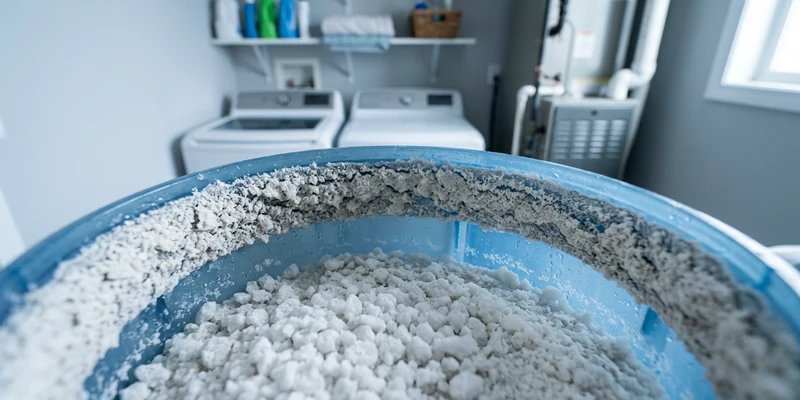
- A salt bridge is a hardened crust of salt spanning the brine tank above the waterline, leaving an air gap between the crust and the water below.
- It stops salt from dissolving into brine, which means no regeneration happens even though the tank looks full.
- Most bridges can be broken up carefully by hand or with a blunt tool, without needing to empty or replace the tank.
Salt Bridge Signs and Fixes at a Glance
Use this table to match what you are seeing in the brine tank to the likely explanation and next step.
| What you see | Likely cause | What to do |
|---|---|---|
| Salt level looks unchanged over weeks | A salt bridge is blocking water from reaching the salt below | Check for a hard crust and break it up carefully |
| Water feels hard again despite full tank | No brine has been made, so regeneration has not happened | Clear the bridge, then run a manual regeneration |
| Salt looks clumped or mushy at the bottom | Salt mushing, often from lower-purity rock salt or humidity | Remove the mush and switch to a higher-purity salt type |
| Bridge keeps reforming after clearing | Humidity, temperature swings, or salt quality in the tank | Address tank conditions and salt type, not just the symptom |
What a Salt Bridge Actually Is
Inside the brine tank, salt is supposed to sit in standing water so it dissolves into brine over time, which the control valve then draws through the resin during regeneration. A salt bridge forms when the salt near the top hardens into a solid crust that spans the tank, leaving a hollow air gap between that crust and the water underneath. From the outside, the tank can look full of salt while almost none of it is actually available to dissolve.
Because the bridge blocks contact between the salt and the water below it, no new brine gets made, and without brine, the resin cannot regenerate. The softener keeps running through its normal cycle, but effectively without salt, which is why hardness can come back even though the tank appears stocked.
What Causes One to Form
Salt bridges are commonly linked to high humidity in the space around the brine tank, temperature swings that cause the salt to partially dissolve and re-harden, and lower-purity salt types, particularly rock salt, which contains more natural impurities that promote clumping. Overfilling the tank or letting salt sit undisturbed for long stretches between checks can also contribute.
A related issue, sometimes called salt mushing, happens when salt breaks down into a thick sludge at the bottom of the tank rather than a hard crust at the top. Both problems point back to the same underlying factors: moisture, temperature, and salt quality.
How to Break Up a Salt Bridge Safely
Start by turning off or bypassing the softener if your manufacturer’s manual recommends it for this task. Gently press down along the surface of the salt with a broom handle, a length of PVC pipe, or a similarly long, blunt, non-sharp tool, working carefully rather than forcing it, since brine tanks can crack under aggressive pressure. In many cases, the crust breaks apart in sections and the salt underneath begins dissolving normally again.
For a stubborn bridge, some owners carefully pour a small amount of warm water over the crust to help loosen it before breaking it up, though this should be done cautiously to avoid over-diluting the brine. If the crust will not budge, is unusually thick, or keeps reforming immediately, that is a reasonable point to stop and call a water treatment professional rather than risk damaging the tank.
Preventing Bridges: Salt Choice and Tank Habits
Choosing a high-purity salt made specifically for water softeners, rather than general-purpose rock salt, is one of the more effective long-term fixes, since fewer impurities means less clumping. Keeping the brine tank in a dry, temperature-stable location, checking salt levels on a regular basis rather than letting the tank run near empty or stay overfull for long stretches, and avoiding overfilling all help reduce how often bridges form.
Our water softener salt guide covers the differences between pellet, solar, and potassium chloride options in more detail if you are deciding which type suits your household and tank conditions best. If you are restocking anyway, evaporated pellet salt labeled specifically for water softeners tends to resist bridging better than generic rock salt.

When to Call a Professional Instead
If clearing the bridge does not restore normal softening after a manual regeneration, or if you notice damage to the tank itself, unusual odors, or a bridge that reforms within days rather than weeks, it is worth having a water treatment professional take a look. Recurring bridging can sometimes point to a control head or fill-cycle issue rather than the salt itself, which is not something to diagnose from the outside of the tank alone.
Regular checks of the brine tank as part of routine water softener maintenance make it much easier to catch a bridge early, before it has a chance to stop regeneration for an extended stretch.
Common Mistakes to Avoid
- Assuming a full-looking tank means the softener has enough salt. A bridge can leave the tank looking stocked while almost no salt is actually dissolving.
- Using aggressive force to break a bridge. This risks cracking the tank; work carefully with a blunt tool instead.
- Sticking with low-purity rock salt after repeated bridging. Switching to a higher-purity salt is often the more effective long-term fix.
- Ignoring a bridge that keeps reforming. Recurring bridging can point to a bigger issue with tank conditions or the control head.
- Forgetting to run a manual regeneration after clearing a bridge. Clearing the crust alone does not restore softening until brine actually gets made and used.
Frequently Asked Questions
What does a water softener salt bridge look like? A hard, crusted layer of salt near the top of the brine tank, often with a visible gap or hollow space between the crust and the water underneath.
How do I know if my softener has water softener bridging? The clearest signs are salt that does not seem to go down over time, water that feels hard again despite a full-looking tank, or reduced softening performance after a period of normal use.
Can I prevent a salt bridge from forming? Using higher-purity salt made for water softeners, keeping the tank in a dry and temperature-stable location, and checking salt levels regularly all reduce the chances of bridging.
Is it safe to break up a salt bridge myself? Generally yes, using a blunt tool and gentle pressure. Avoid sharp objects or excessive force, since the tank can crack.
What is salt mushing, and is it the same as a salt bridge? Salt mushing is a related problem where salt breaks down into sludge at the bottom of the tank instead of forming a crust at the top. Both stem from similar causes, moisture, temperature, and salt quality.
Do I need to run a regeneration cycle after clearing a bridge? Yes. Clearing the crust restores contact between the salt and water, but a manual regeneration cycle is what actually uses that brine to recharge the resin.
The Bottom Line
A water softener salt bridge is a hardened crust that blocks salt from dissolving into brine, which quietly stops regeneration even though the tank can look full. Most bridges can be broken up carefully with a blunt tool, and switching to higher-purity salt along with keeping the tank dry and checked regularly cuts down on how often it happens. A bridge that keeps reforming or will not clear is a reasonable point to bring in a water treatment professional.