Last updated: August 16, 2026
Water filter cartridge replacement is one of the simplest maintenance jobs on a well water system, but it is also the one most owners put off, usually because they are not sure how often it actually needs doing or worried about doing it wrong. Neither concern holds up once you know what to look for.
This guide covers how to replace water filter cartridge media in a standard housing, the signs that tell you it is time regardless of the calendar, and how often to change water filter cartridges according to manufacturer guidance. It does not give you a fixed timeline, since that depends on your water and your specific cartridge, but it gives you the signals that matter more than a date on a sticker.
Quick Answer
How do you replace a water filter cartridge?
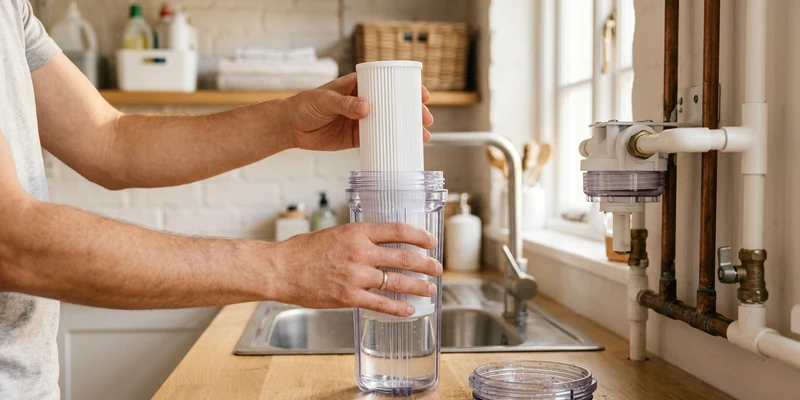
- Shut off water to the housing, relieve pressure, and open the canister with the filter wrench that typically comes with the system.
- Remove the old cartridge, rinse the housing, and check the O-ring before installing the new cartridge.
- Watch for a drop in water pressure between now and your next scheduled change; it is usually the clearest sign a cartridge is due sooner than expected.
Cartridge Replacement at a Glance
Every housing is a little different, so always follow the manufacturer’s specific instructions for your system. This table covers the general steps that apply to most standard sediment and carbon filter housings.
| Step | What to do | Why it matters |
|---|---|---|
| Shut off water supply | Close the valve feeding the housing, or use the bypass valve if the system has one | Prevents water spraying out when the canister is opened |
| Relieve pressure | Open a nearby faucet briefly, or use a pressure release button if present | Makes the housing easier and safer to unscrew |
| Open the housing | Use the filter wrench, usually included with the system, to unscrew the canister | Housings are often too tight to open by hand once seated |
| Remove and rinse | Take out the old cartridge and rinse the inside of the housing | Clears out any sediment buildup before the new cartridge goes in |
| Check the O-ring | Inspect for cracks or debris, and lubricate per the manufacturer’s guidance if applicable | A damaged or dirty O-ring is a common cause of leaks after reassembly |
| Install and restore water | Seat the new cartridge, reassemble the housing, and slowly restore water flow | Check for leaks around the housing seal before leaving it unattended |
How Often to Change a Water Filter
How often to change a water filter depends on your household’s water quality and usage rather than a single number that applies to every home. Manufacturers publish a rated interval for each specific cartridge, and that rating is the starting point, but actual well water conditions can shorten it considerably compared to municipal water.
Households with heavier sediment, higher water usage, or more people in the home typically need to replace cartridges more often than the manufacturer’s baseline estimate assumes. Rather than guessing, check your specific cartridge’s rated capacity and combine it with the pressure-based signs covered below.

The Clearest Sign: Falling Water Pressure
A noticeable drop in water pressure is generally the most reliable practical sign that a filter cartridge needs replacing, more reliable than any fixed calendar schedule. As sediment and debris accumulate inside the media, flow through the cartridge slows down, and that shows up at your taps as reduced pressure even though nothing else in the plumbing has changed.
If pressure drops noticeably before your next scheduled cartridge change, treat that as the trigger rather than waiting out the calendar. Consistently changing cartridges early when pressure drops, rather than sticking rigidly to a fixed interval, tends to protect downstream equipment like a softener or reverse osmosis membrane from extra strain.
Matching the Housing and Cartridge Size
Common Housing Formats
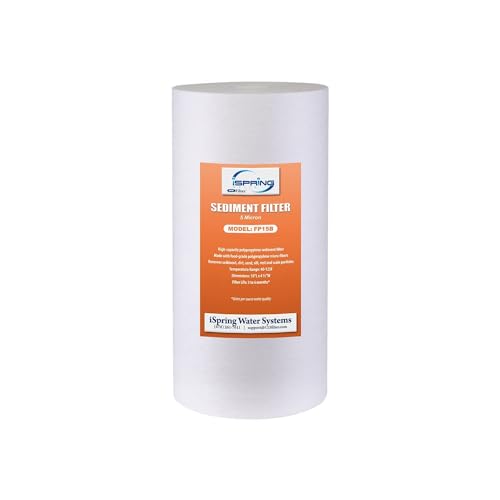
Standard filter housings are commonly described by their general size category, such as a slim housing for lower-flow applications or a larger big blue housing for higher household flow rates, along with a cartridge length, most often around 10 or 20 inches. Buying a replacement cartridge that does not match your housing’s diameter and length is one of the most common ordering mistakes.
Confirming Before You Order
Check the housing’s model number or the cartridge that came with your original system before ordering a replacement, rather than relying on a general size description alone. Keeping a spare cartridge on hand that matches your exact housing avoids running unfiltered water while you wait on a replacement to arrive.
What Happens If You Skip a Replacement
Running a filter housing well past its intended cartridge life does more than reduce filtration performance. A severely clogged cartridge can restrict flow enough to strain fittings and connections, and in some cases spent media can begin releasing what it previously captured back into the water stream rather than holding onto it indefinitely.
Neither outcome is worth the modest cost of staying ahead of the schedule. Our sediment filter guide and carbon filter guide cover how each media type behaves as it reaches the end of its rated life.
Keeping a simple log of installation dates and pressure readings, even something as basic as a note on the housing itself, makes it much easier to spot a pattern over time. A household that tracks this tends to notice sooner when a cartridge is wearing out faster than expected, which usually points to a change in well water conditions worth investigating rather than a one-off fluke.
Common Mistakes to Avoid
- Waiting for visible dirt before changing a cartridge. Carbon media can stop adsorbing effectively well before it looks obviously spent.
- Ignoring a pressure drop. It is usually a clearer signal than any fixed replacement schedule.
- Ordering the wrong cartridge size. Confirm your housing’s exact diameter and length before buying a replacement.
- Skipping the O-ring check. A cracked or dirty O-ring is a common cause of leaks after reassembly.
- Forgetting to relieve pressure before opening the housing. This is the most common cause of water spraying out during a cartridge change.
Frequently Asked Questions
How often should I change my water filter cartridge? It depends on your water quality and household usage, following the manufacturer’s stated interval for your specific cartridge. Heavier sediment or higher usage generally shortens that interval, and a pressure drop is the clearest practical sign a change is due sooner.
Do I need to turn off the main water supply for cartridge replacement? You need to shut off water to the specific housing, either through a dedicated valve or a bypass valve if your system has one. Whether that requires shutting off the whole house depends on how your system is plumbed.
What tools do I need to replace a water filter cartridge? Most housings include a filter wrench designed for that specific canister. Beyond that, most cartridge changes do not require additional tools, though keeping towels handy for any residual water is a good idea.
Can I reuse a water filter housing with a different brand of cartridge? Sometimes, if the replacement cartridge matches your housing’s exact diameter and length. Check compatibility with the manufacturer before assuming a universal fit, since threading and sizing can vary between brands.
Why does my water pressure drop before my filter’s rated change interval? Heavier sediment load, higher household usage, or well water conditions that differ from the manufacturer’s testing baseline can all shorten a cartridge’s effective life. Treat the pressure drop as the trigger rather than the original estimate.
Is it bad to run a filter housing without a cartridge temporarily? Most housings are not designed to run empty; check your system’s bypass valve instructions if you need to service the housing without interrupting water to the house.
The Bottom Line
Water filter cartridge replacement is a straightforward process once you know the general steps: shut off the water, open the housing with the included wrench, swap the cartridge, check the O-ring, and restore flow. How often to change a water filter depends on your specific water and usage rather than a universal number, and a drop in water pressure is generally the clearest sign a change is due, regardless of what the calendar says.