Last updated: August 16, 2026
Reverse osmosis is effective at removing dissolved solids precisely because its membrane does not distinguish between contaminants and naturally occurring minerals, calcium and magnesium included. Some households remineralize reverse osmosis water afterward to bring some of that mineral content back, mostly for taste, and it is worth understanding how that stage actually works before adding one.
This guide covers what a reverse osmosis remineralization cartridge does, how it differs from a basic alkaline filter, and where it fits in a reverse osmosis setup. It stays away from health claims, since remineralization is a taste and water chemistry topic, not a medical one, and any specific health question about mineral intake is best directed to a healthcare provider.
It also covers where remineralization sits relative to the rest of your system, since it is easy to confuse with a step that happens earlier in the process. Understanding the order of stages helps explain why this particular add-on exists at all, and why it only makes sense after the membrane, not before it.
Quick Answer
What does it mean to remineralize reverse osmosis water?
- A remineralization cartridge, installed as a final stage after the RO membrane, slowly adds minerals like calcium and magnesium back into the treated water.
- This is mainly a taste and water chemistry adjustment, since RO strips out those minerals along with contaminants during filtration.
- It is a different, broader process than a basic alkaline filter, which mainly adjusts pH rather than restoring a fuller range of minerals.
Remineralization at a Glance
Use this table to see how a remineralization stage compares to a simpler alkaline filter, since the two terms are often used loosely and interchangeably even though they work differently.
| Feature | Alkaline filter | Remineralization filter |
|---|---|---|
| Main effect | Raises pH toward the alkaline range | Adds back a broader range of minerals, calcium and magnesium among them |
| How it works | Water passes over alkalizing mineral media | Water passes over calcite or a calcite and magnesium oxide blend that dissolves slowly |
| pH change | The primary intended effect | A byproduct of the mineral content added, not the main goal |
| Best suited for | Households mainly focused on adjusting pH | Households wanting to restore mineral content and taste after RO filtration |
Why RO Water Loses Minerals in the First Place
A reverse osmosis membrane works by pushing water through a barrier fine enough to reject a broad range of dissolved solids, and that process does not selectively target only unwanted substances. Naturally occurring minerals, calcium and magnesium in particular, are reduced along with the contaminants the system is designed to address, which is simply how the membrane technology works rather than a flaw in a specific product.
This is also why RO water is naturally more acidic right after filtration, generally landing in a lower pH range than the source water started at, before any remineralization stage is added. That shift is a predictable side effect of mineral removal, not a sign anything is wrong with the system.

How a Remineralization Cartridge Works
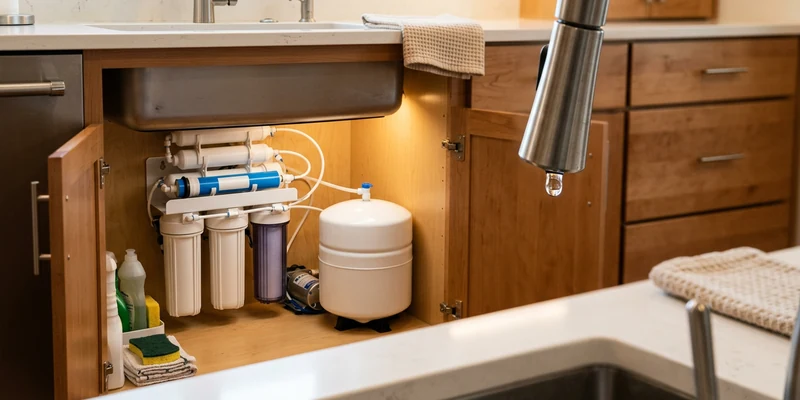
A remineralization cartridge installs in the filter housing after the RO membrane, typically as the last stage before the water reaches the dedicated faucet. Inside, it contains mineral media, commonly calcite or a calcite and magnesium oxide blend, that slowly dissolves into the water as it flows through, adding calcium, magnesium, and trace minerals back into the stream.
Some products blend the mineral media directly into a carbon post-filter stage rather than using a standalone cartridge, so check your specific system’s stage configuration to know whether remineralization is already built in or needs to be added separately. The exact mineral content added varies by product and is set by the manufacturer’s media formulation, not something that can be reliably estimated in general terms.
Remineralization vs. a Simple Alkaline Filter
An alkaline filter is a narrower cartridge focused mainly on raising pH by passing water over basic alkalizing mineral media. A full remineralization filter does more: it restores a broader spectrum of minerals, with the pH increase arriving as a natural byproduct of that mineral content rather than being the primary design goal.
If your main interest is adjusting the taste and mineral content of your RO water rather than pH specifically, a remineralization cartridge is generally the more complete option of the two. If you already have a remineralization stage installed, adding a separate alkaline filter on top of it is usually unnecessary.
Where This Fits in Your RO System
Remineralization is an optional add-on stage, not a required part of a reverse osmosis system, and plenty of households run RO systems without one. If you are setting up a new system, our RO installation guide covers how the stages typically connect, and a remineralization cartridge fits in as a final add-on after the storage tank.
If you are noticing changes in your RO water’s taste over time, it is worth checking whether that traces back to the remineralization media running low, or separately to the membrane itself needing attention. Our membrane replacement guide covers the signs that point specifically to the membrane rather than the remineralization stage.
Because a remineralization cartridge sits after the membrane rather than before it, a spent cartridge will not affect how well the membrane itself is filtering the water. It mainly affects taste and mineral content at the tap, which is a useful distinction to keep in mind when troubleshooting a change you have noticed, since the fix and the cause can live in different parts of the same system.
Common Mistakes to Avoid
- Assuming remineralization is required for RO to work properly. It is an optional taste and mineral-content stage, not a functional requirement of the filtration process.
- Confusing an alkaline filter with a full remineralization filter. They work differently; check which one your system actually has before assuming what it does.
- Making health claims about remineralized water. This is a taste and water chemistry topic; any specific health or dietary question belongs with a healthcare provider.
- Ignoring the remineralization cartridge’s own replacement schedule. Like other stages, the mineral media depletes over time and needs replacing per the manufacturer’s guidance.
- Assuming every RO system already includes remineralization. Some do, built into a post-filter; many do not, and it needs to be added separately.
Frequently Asked Questions
Do I need to remineralize reverse osmosis water? It is optional. Many households run reverse osmosis systems without a remineralization stage, and adding one is mainly a matter of taste preference and personal choice rather than a functional necessity.
What is the difference between remineralization and an alkaline filter? An alkaline filter mainly raises pH using basic mineral media. A remineralization filter restores a broader range of minerals, calcium and magnesium included, with the pH increase happening as a natural side effect rather than the main goal.
Why does RO water taste different before remineralization? Reverse osmosis removes naturally occurring minerals along with contaminants, and that mineral content is part of what gives water its familiar taste. Removing it can make the water taste noticeably different, which is what a remineralization stage is designed to address.
How long does a remineralization cartridge last? It depends on the specific product and your household’s water usage, following the manufacturer’s stated replacement interval for that cartridge, similar to other filter stages in the system.
Can I add a remineralization filter to an existing RO system? In many cases, yes, if your system’s housing configuration supports adding an extra stage. Check compatibility with your specific system’s manufacturer before purchasing a cartridge.
Does remineralized reverse osmosis water make health claims true? No specific health claim should be assumed from remineralization alone. It is a taste and mineral-content adjustment; any dietary or health question about mineral intake is best discussed with a healthcare provider.
The Bottom Line
Remineralizing reverse osmosis water is an optional final stage that adds calcium, magnesium, and other minerals back into water after the RO membrane has stripped them out, mainly affecting taste and pH rather than anything health-related. A full remineralization filter does more than a basic alkaline filter, restoring a broader mineral profile rather than just adjusting pH, and it is worth adding if you have noticed a flat or different taste from your RO system, not because it is required for the system to function.