Last updated: August 16, 2026
Low water pressure well problems tend to show up gradually, a shower that feels weaker than it used to, a hose that takes longer to fill a bucket, until one day it is impossible to ignore. Because a well system has more moving parts than a municipal hookup, pinning down the cause means working through a short list rather than guessing at one fix.
This guide walks through the most common causes of low pressure on a well system, how to tell whether the problem is whole-house or limited to one fixture, and when the issue moves from something you can check yourself to something that needs a licensed well or pump professional. Well water low pressure can show up gradually or all at once, and which pattern you see is itself a useful clue.
Quick Answer
What causes low water pressure on a well?
- A misadjusted or failing pressure switch and a waterlogged pressure tank are two of the most common whole-house causes.
- Clogged pipes from mineral scale or sediment, and overdue sediment or iron filters, can restrict flow even when the pump and tank are working fine.
- If pressure loss is sudden or paired with a pump that is cycling on and off rapidly, that points toward the well or pump itself, which is a job for a licensed well or pump professional.
Low Well Water Pressure Causes at a Glance
Start with this table to narrow down where the problem likely sits before working through the detail sections below.
| Cause | Where it shows up | What to check first |
|---|---|---|
| Pressure switch misadjusted or failing | Whole house, pressure feels consistently low | Pressure gauge reading against the switch’s cut-in and cut-out settings |
| Waterlogged pressure tank | Whole house, pump cycles more than usual | Tank air bladder pressure when the system is drained |
| Clogged pipes (scale or sediment) | Whole house, gradual decline over time | Flow at an outdoor spigot close to the main line |
| Overdue sediment or iron filter | Whole house or one zone, often gradual | Filter age and replacement schedule |
| Well or pump losing capacity | Sudden, often with rapid pump cycling | Call a licensed well or pump professional |
Whole-House vs Single-Fixture Pressure Drops
The first useful diagnostic step is figuring out whether every fixture in the house has lost pressure or just one. If a single faucet or showerhead is weak while everything else is normal, the cause is usually local, a clogged aerator, a partially closed valve, or a fixture-specific line issue, not the well system itself. If the whole house feels weak at once, the cause is more likely upstream, at the pressure tank, switch, pump, or well.
This distinction saves a lot of wasted effort, since a whole-house cause will not be fixed by cleaning one showerhead, and a single-fixture cause will not be fixed by adjusting the pressure switch.
Pressure Switch and Pressure Tank Issues
The pressure switch controls when your pump turns on and off based on the pressure it senses, and a misadjusted or aging switch is one of the most frequently cited causes of low pressure on well systems. Switches can be adjusted, but that adjustment interacts with your pump’s capacity and the tank’s drawdown, so it is worth understanding the relationship rather than turning a dial and hoping.
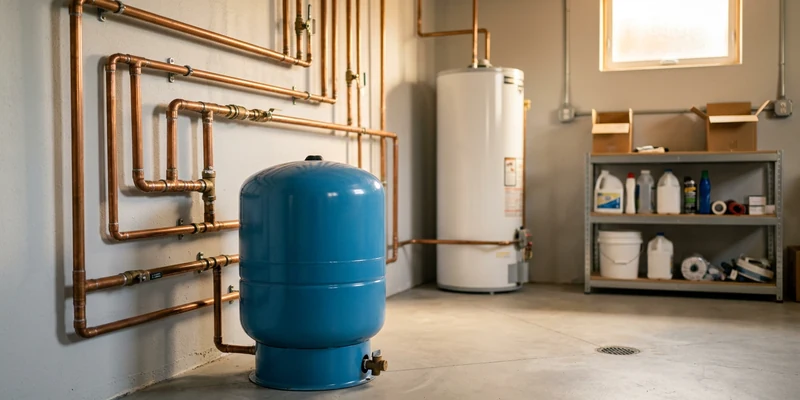
The pressure tank itself can also be the culprit. Inside most tanks is an air bladder that keeps a cushion of pressure between pump cycles; when that bladder fails, the tank effectively stops doing its job, water pressure drops, and the pump often starts cycling on and off far more frequently than it should. Checking the tank’s air pressure while the system is depressurized is a standard diagnostic step, and a waterlogged or failed tank is a common, fixable cause rather than something requiring an immediate pump replacement.
When the switch and tank both check out, the pump itself is the next thing to look at, and age matters as much as symptoms. Our well pump guide covers sizing and the signs a pump is near the end.
Clogged Pipes and Overdue Filters
Even a perfectly healthy pump and tank cannot deliver full pressure through pipes that have narrowed internally. Mineral scale from hard water and sediment carried up from the well can build up gradually inside supply lines, restricting flow over months or years rather than all at once, which is part of why this cause is easy to miss until it becomes significant.
Sediment and iron filters are also a common, overlooked source of pressure loss. As these filters do their job and accumulate material, they restrict flow more and more until they are replaced or cleaned, which means a filter that is overdue for a change can quietly become the reason pressure has dropped. This overlaps with routine well water treatment, since keeping filters on schedule is as much a pressure maintenance task as a water quality one.
An undersized filter housing is a common cause of a pressure drop that looks like a well problem. Our whole house filter guide covers flow rate, which is the specification that decides this.
When Iron Bacteria or the Well Itself Is the Cause
In some cases, iron bacteria can clog the small pipe nipple that connects to the pressure switch, causing the switch to read pressure incorrectly and behave erratically even though the rest of the system is fine. If you have also noticed the signs described in our iron bacteria guide, reddish slime or an earthy odor, that connection is worth considering.
A well losing capacity, sometimes described as the well running low, is a different and more serious category. This can show up as a pump that short cycles, turning on and off in rapid succession, or pressure that drops noticeably during heavier use like laundry or watering. This is a situation where guessing at a fix is not a good idea; a licensed well or pump contractor has the tools to check well yield and pump performance safely, and this is the point where a homeowner-level checklist should hand off to a professional.
A Simple Order to Check Things In
Working through causes roughly from easiest to check to most involved tends to save time. Start by confirming whether the drop is whole-house or one fixture. If whole-house, check the pressure tank’s air charge and the pressure switch’s settings next, since both are relatively quick to inspect. From there, consider filter age and, if you have noticed scale or sediment elsewhere, the possibility of clogged pipes.
If none of that explains it, or if the pump is cycling unusually often, that is the signal to stop troubleshooting alone and bring in a licensed well or pump professional, since misdiagnosing a well yield problem as a simple switch issue can waste time without fixing anything.
Common Mistakes to Avoid
- Adjusting the pressure switch without understanding pump capacity. A change that seems to fix pressure can push the pump beyond what it is rated for.
- Ignoring filter replacement schedules. An overdue sediment or iron filter is an easy, common cause that is simple to fix once identified.
- Assuming every pressure drop means the pump is failing. Tanks, switches, and filters are more common culprits than the pump itself.
- Treating rapid pump cycling as normal. That pattern often signals a tank, switch, or well yield issue worth addressing promptly.
- Skipping a professional when the well itself may be involved. Well yield and pump diagnostics are not a safe DIY guess.
Frequently Asked Questions
Why does my well water have low pressure only sometimes? Intermittent low pressure often points to a pressure tank or switch issue that worsens under higher demand, such as running multiple fixtures at once, rather than a constant, single cause.
Can a clogged filter cause low water pressure well problems? Yes. Sediment and iron filters restrict flow more as they accumulate material, and an overdue filter is one of the more common, easily fixed causes of gradual pressure loss.
Is well pump short cycling related to low pressure? Often, yes. A waterlogged pressure tank or a well losing capacity can both cause the pump to cycle on and off rapidly while pressure stays low, and this combination is a good reason to involve a professional.
How do I know if it is the pressure tank or the pump? Checking the tank’s air bladder pressure while the system is depressurized is a standard first step; if the tank checks out and cycling continues, the pump or well itself may be involved, which calls for a professional.
Does well water treatment affect water pressure? Yes, indirectly. Filters and softeners used in routine well water treatment can restrict flow if they are overdue for a change or improperly sized, so maintenance schedules matter for pressure as well as water quality.
When should I call a well professional instead of troubleshooting myself? If pressure loss is sudden, if the pump is cycling rapidly, or if basic checks like the tank and switch do not explain it, a licensed well or pump contractor can diagnose well yield and pump issues safely.
The Bottom Line
Low water pressure on a well system usually traces back to a handful of common causes: a misadjusted pressure switch, a waterlogged pressure tank, clogged pipes, or an overdue filter. Working through them in roughly that order, starting with whether the drop is whole-house or localized, resolves most cases without professional help. Sudden pressure loss or a pump that is cycling rapidly points toward the well or pump itself, and that is the point to bring in a licensed well or pump professional rather than keep guessing.