Last updated: August 16, 2026
Well water testing is the one habit that separates well owners who know what is in their water from well owners who are guessing. A private well is not connected to a public water system, so nobody is sampling it on a schedule, checking it against federal limits, or sending a report to your mailbox. That job belongs entirely to the person who owns the well, which means the testing has to be requested, not assumed.
This guide covers what well water testing checks for, how often to do it, what to expect in terms of time, and when a result is serious enough to call your local health department. None of this replaces a lab report or medical guidance, it is meant to help you build a routine.
Quick Answer
What does well water testing actually involve, and how often?
- An annual basic panel covers total coliform bacteria, nitrate, total dissolved solids, and pH, run through a certified laboratory rather than a single test strip.
- A broader panel every three to five years adds heavy metals, pesticides or herbicides near farmland, VOCs, and radon or PFAS where relevant.
- Private wells fall outside the Safe Drinking Water Act, so frequency and follow up are up to the owner; budget about one to two weeks for a certified lab report.
Well Water Testing at a Glance
The table below summarizes what health departments and extension services typically recommend testing for, and how often. Treat it as a starting point, since local conditions such as nearby agriculture, older plumbing, or known regional contaminants can add items to your panel.
| What to test for | How often | Why it matters |
|---|---|---|
| Total coliform bacteria | Every year | Indicator that surface water or contamination may have reached the well |
| Nitrate | Every year | Signals possible agricultural runoff or septic influence; relevant for infants in the household |
| Total dissolved solids and pH | Every year | Baseline water chemistry that affects taste, plumbing, and treatment choices |
| Heavy metals (lead, arsenic, others) | Every three to five years, or if plumbing is old | Naturally occurring or plumbing-related contaminants with EPA enforceable limits for public systems |
| Pesticides, herbicides, VOCs | Every three to five years, more near farmland or industry | Land use nearby can introduce these into groundwater over time |
| Water hardness | Any time, or when scale/soap issues appear | Determines whether a softener or scale treatment is worth considering |
Why Well Water Testing Is Entirely on You
Public water systems must test regularly and report results to customers under the Safe Drinking Water Act. Private wells fall outside that law: no agency samples your water automatically, no annual report arrives, and no one checks it after you move in unless you arrange it yourself. That is simply how the regulation is structured, and it puts the entire responsibility on the well owner.
This is also why well water testing near me searches spike after a home purchase, a flood, or a change in taste or color, those are the moments people realize testing was never automatic. A simple annual habit, plus a broader test every few years, closes that gap.
The Annual Basics: Coliform Bacteria, Nitrate, TDS, and pH
Health departments and extension services consistently recommend testing four things every year regardless of how your water looks or tastes: total coliform bacteria, nitrate, total dissolved solids, and pH. Coliform bacteria are not usually harmful on their own, but their presence is treated as a warning sign that a pathway exists for other organisms, including disease causing ones, to reach the well.
Nitrate testing matters because groundwater naturally carries some nitrate, but levels above roughly 3 mg/L generally point to an outside source such as fertilizer runoff, livestock operations, or a nearby septic system. Households with infants under six months are often advised to talk to a doctor or the local health department if a nitrate result comes back elevated, since this is a topic for medical guidance, not a DIY judgment call.
The Expanded Panel: Metals, Chemicals, and Radon
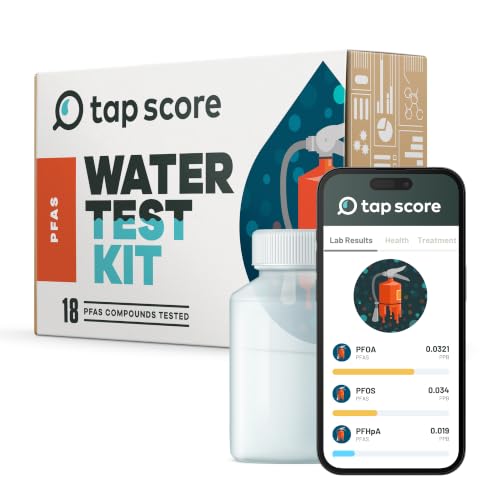
Every three to five years, or sooner if something changes, it is worth running a broader panel: heavy metals such as lead, arsenic, mercury, and cadmium, pesticides or herbicides near farmland, and volatile organic compounds if there is nearby industry. Lead is worth flagging on its own since there is no federal lead limit for private wells, and older plumbing or lead solder is the most common source. PFAS, sometimes called forever chemicals, and radon depend heavily on your region, so ask a certified lab or your local health department rather than guessing from national averages.
Water Hardness Testing: Reading the Grains Per Gallon Scale
A water hardness test measures dissolved calcium and magnesium, reported in grains per gallon or milligrams per liter. The commonly used scale runs from soft at roughly zero to 3.5 grains per gallon, moderately hard from 3.5 to 7, hard from 7 to 10.5, and very hard above 10.5, with one grain per gallon equal to about 17.1 mg/L. This can be done with an inexpensive strip at home, or included in a lab panel for a precise number.
Hardness itself is not a health or regulatory concern, it is a nuisance and plumbing issue: scale buildup, reduced soap lather, and spotting on fixtures. That makes it one of the few well water tests where a home kit result is genuinely useful on its own, unlike the health-sensitive contaminants covered elsewhere.
How Often to Test Well Water: Building a Practical Schedule
How often to test well water depends on what you are testing: run the annual basics every year without exception, save the broader panel for every three to five years, and treat certain life events as an automatic trigger regardless of where you are in that cycle. This is the same question behind how often should i test my well water searches, and the honest answer is that the schedule has to be self imposed, since there is no official calendar handed to well owners.
The easiest way to keep up with it is to attach testing to something you already do every year, like a furnace filter change or a birthday, and to keep a simple log of results over time rather than treating each test as a standalone event. A slow upward trend in nitrate or hardness tells you something a single result cannot, and a basic home test kit can help track hardness or pH between lab panels, though it is not a substitute for a certified laboratory on anything health related.
Reading Results Without Overreacting or Underreacting
Public water systems are held to enforceable federal limits under the Safe Drinking Water Act, and those numbers are a useful reference even though they do not legally apply to private wells. The EPA’s maximum contaminant level for nitrate is 10 mg/L, arsenic is regulated at 10 parts per billion, and the 2024 PFAS rule set enforceable limits of 4 parts per trillion for PFOA and PFOS individually. Lead works differently: public systems use a 15 ppb action level under the Lead and Copper Rule, but EPA’s own health goal for lead is zero, since no exposure level is considered fully risk free. None of these EPA drinking water standards are legally required of a private well, but they remain the clearest reference point for a lab report.
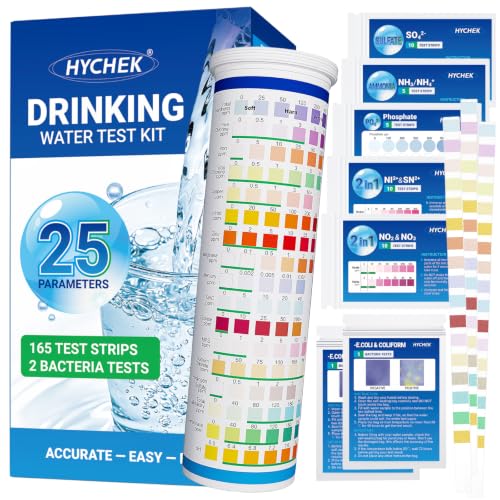
None of these numbers are something to self-diagnose from a strip. Strips are useful for quick screening on parameters like hardness or general water chemistry, but for bacteria, nitrate, lead, arsenic, and PFAS, only a certified laboratory confirms what is in your water; our full comparison of water test strips vs. a lab test walks through that decision in more detail. If a lab result comes back elevated or positive, the next step is contacting your local health department, not deciding on treatment based on the number alone.
What to Expect: The Time Investment From Sample to Report
Pricing for well water testing cost varies by lab, region, and how many parameters you include, so this guide will not put a number on it. What is consistent is the time: a home water test kit gives a rough reading in minutes, while a certified laboratory panel means collecting a sample under specific instructions, shipping or dropping it off, and waiting anywhere from a few days to about two weeks for a written report. Broader panels covering metals, PFAS, or pesticides can take longer, so ask the lab directly about turnaround if a real estate closing or another deadline is involved.
A few habits make that time investment pay off. Read the collection instructions fully before you start, since bacteria samples need clean technique and prompt shipping to stay valid, and keep a copy of every report to compare year over year. If a result comes back elevated, budget time for a follow-up conversation with your local health department and the lab that ran the test, since that conversation is what turns a report into a decision.
When to Test Outside the Normal Schedule
Certain events call for testing right away rather than waiting for the annual or five-year mark: buying a home with an existing well, since you have no history of its results; flooding; a nearby land use change such as new farmland or a fuel storage tank; recent plumbing work; or a new infant or pregnant person in the household.
A sudden shift in taste, color, or smell is also worth testing over; our guides to sulfur smell in well water and cloudy well water walk through those specific symptoms in more detail.
Choosing a Certified Laboratory
Not every lab that offers water testing is equipped to handle every contaminant, and results for health-regulated substances should come from a laboratory certified by your state’s environmental or health agency. Most states publish a list of certified laboratories, and your local health department can point you to it if you search for well water testing near me and are not sure which option is legitimate. Ask what the panel includes before you send a sample, since a bundled water test kit may cover the annual basics without touching metals or PFAS, and follow the collection instructions closely since a lab will usually provide specific steps rather than leaving you to guess.
Common Mistakes When Testing Well Water
- Assuming clear, good-tasting water is automatically safe. Nitrate, lead, arsenic, and bacteria are often invisible and tasteless at concerning levels.
- Treating a home test strip as a final answer for health-regulated contaminants. Strips screen; they do not confirm bacteria, nitrate, lead, arsenic, or PFAS.
- Skipping the annual test because nothing changed last year. Groundwater conditions and nearby land use can shift gradually without any obvious signal.
- Only testing after a problem appears. Several common contaminants show no taste, smell, or color at all, so baseline results matter more than a symptom.
- Using an uncertified lab for a legal or real estate transaction. Some closings and permits require certified results specifically.
- Rushing sample collection or missing the shipping window. A contaminated collection or a sample that sits too long can force a full retest.
Frequently Asked Questions
How often should I do well water testing? A basic annual test for bacteria, nitrate, TDS, and pH, plus a broader metals and chemicals panel every three to five years.
Do EPA drinking water standards apply to my well? Not legally, since private wells sit outside the Safe Drinking Water Act, but EPA’s numbers for nitrate, lead, arsenic, and PFAS are widely used as reference points anyway.
Is well water testing cost mostly about money or time? Pricing varies by lab and panel size, but the time investment, sample collection, shipping, and waiting for a report, is consistent everywhere.
How long does a certified lab panel usually take? Basic panels often return within about one to two weeks; broader panels covering metals or PFAS can take longer.
Can I just use a cheap water test kit instead of a lab? A kit works for quick screening like hardness, but bacteria, nitrate, lead, arsenic, and PFAS need a certified laboratory result.
What should I do if a test comes back positive for bacteria? Contact your local health department and the lab that ran the test; do not interpret or treat a single result on your own.
The Bottom Line
Well water testing is not automatic, and that is the single most important fact for any well owner to internalize. An annual basic panel for bacteria, nitrate, TDS, and pH, paired with a broader metals panel every three to five years, covers most of what health departments recommend. Budget about a week or two for a certified lab report rather than a strip-speed answer, and treat any concerning result as a reason to call your local health department, not a guess.