Last updated: August 16, 2026
A water test kit is the cheapest, most useful purchase a well water household can make, because every other decision on this site, softener sizing, filter selection, RO certification, depends on knowing what is actually in your water first. Municipal water gets tested and reported by the utility. Private wells do not, which puts the responsibility for testing entirely on the homeowner.
This guide covers what home test kits can and cannot tell you, when a certified laboratory is the right call instead, and which kits are worth buying for routine monitoring versus a one-time baseline check.
This article contains affiliate links. If you buy through them, we may earn a commission at no extra cost to you. Learn more.
Quick Answer
Which water test kit should you buy?
- For a broad first look at well water, a multi-parameter home test kit covering hardness, iron, pH, and chlorine is a reasonable starting point.
- For hardness alone, before buying a softener, simple test strips give a fast enough reading to size equipment.
- For anything health-related, like lead, bacteria, nitrate, or PFAS, send a sample to a certified laboratory rather than relying on a home kit result alone.
Test Strips, Home Kits, or a Certified Lab
The right testing method depends on what you are checking for. Water test strips are fast and cheap for parameters like hardness, pH, and chlorine, where a rough reading is enough to make a buying decision. Home kits with reagents give more precise readings for a wider parameter list. Certified laboratory testing is the only reliable option for health-related contaminants, where a false negative carries real consequences.
| What to check | Why it matters | What to look for |
|---|---|---|
| Parameter list | Different kits test different things | Match the kit to what you actually suspect or want a baseline on |
| Test method | Strips, reagent drops, and digital meters vary in precision | Reagent-based kits are generally more precise than color-match strips |
| Health-sensitive parameters | Lead, bacteria, nitrate, and PFAS need lab-grade accuracy | Use a certified laboratory rather than a home kit for these |
| Sample handling | Some parameters degrade quickly after collection | Follow the kit or lab’s collection and shipping instructions exactly |
| Frequency | Some parameters change seasonally or after well work | Recheck periodically, not just once at move-in |
| Result interpretation | A number alone does not tell you what to buy | Compare results against EPA drinking water guidance and manufacturer treatment specs |
Once you have results in hand, they point directly to equipment. Hardness readings feed into our water softener guide, while sediment, iron, or taste issues point toward our whole house water filter guide.
What Home Kits Are Good For
Home test kits and strips excel at the parameters that mainly affect equipment sizing rather than health. Hardness, pH, iron staining, and chlorine taste are all reasonable to check at home, and a rough number is usually good enough to size a softener or choose a filter’s certification target. These tests are also useful for routine monitoring between more thorough checks, since they cost little and take minutes.
Where home kits fall short is precision and reliability for anything with real health stakes. A color-match strip depends on lighting, timing, and reading it correctly, none of which meet the standard needed when the result determines whether your water is safe to drink.
When a Certified Laboratory Is the Right Call
For lead, bacteria and coliform, nitrate, and PFAS, a certified laboratory is the only appropriate testing route. These are exactly the contaminants where a wrong result, in either direction, has real consequences, and where EPA drinking water guidance exists precisely because home methods are not reliable enough on their own. Private well owners are not covered by municipal testing requirements, so the EPA recommends annual bacteria testing for private wells as a baseline, along with periodic checks for other contaminants based on local risk factors.
A laboratory test does not by itself make your water safe or unsafe, it gives you an accurate number to act on. If a result comes back elevated, treat that as the start of a conversation with the lab or a water treatment professional about next steps, not a problem a single filter automatically solves. Nothing in this guide should be read as a substitute for that professional guidance.
Our Top Picks at a Glance
How we chose: we compared widely available home water test kits and strips on parameter coverage, test method, and the patterns that repeat across owner feedback. Selections lean on manufacturer specifications and recurring themes in reviews rather than any hands-on trial of our own, and none of these substitute for certified laboratory testing on health-related parameters.
Read the kit’s included parameter list carefully before buying, since “water test kit” covers a wide range of coverage and precision.
🏆 Best Overall
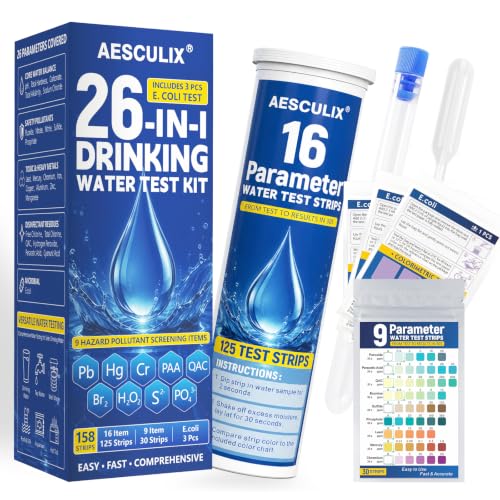
A multi-parameter home kit covering hardness, iron, pH, and chlorine, giving a broad baseline reading for a typical well water household.
💧 Best for Hardness Only
Simple test strips for a fast hardness reading, useful specifically for sizing a water softener without paying for parameters you do not need yet.

🔬 Best Lab Mail-In Kit
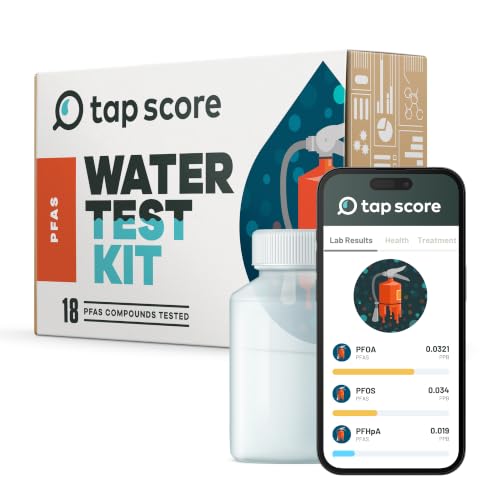
A mail-in test kit that sends your sample to a certified laboratory, the appropriate route for health-related parameters like lead, bacteria, or nitrate.
More Picks by Situation
The three picks above cover most starting points, but a couple of situations call for a narrower test.
🩸 Best for Lead-Specific Screening
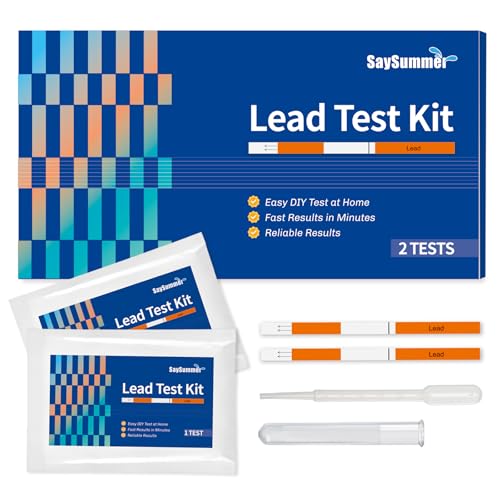
A lead-focused home screening kit for a quick initial check, best treated as a first flag rather than a final answer, followed by certified lab confirmation if it raises concern.
🧪 Best pH Test Kit
A dedicated pH test kit for households tracking water chemistry alongside other treatment equipment, like an RO system or softener.

Testing Frequency and Timing
A one-time baseline test at move-in is the minimum, not the whole plan. Well water conditions can shift with seasons, rainfall, and nearby land use, and the EPA’s general guidance for private well owners is annual testing for bacteria, with other parameters checked periodically or after any noticeable change in taste, smell, or appearance. If you have recently had well work done, a fresh test afterward is worth the small cost.
Keep a simple log of your results over time rather than treating each test as an isolated data point. A hardness or iron reading that creeps upward year over year tells you something a single snapshot cannot.
Common Mistakes to Avoid
- Using a home kit for health-related contaminants. Lead, bacteria, nitrate, and PFAS need certified laboratory testing, not a color-match strip.
- Testing once and never again. Well water conditions change. Follow EPA guidance on retesting frequency rather than treating one test as permanent.
- Misreading strip colors. Lighting and timing affect accuracy. Follow the kit’s instructions exactly, and do not eyeball it under poor light.
- Skipping testing before buying treatment equipment. Softeners, filters, and RO systems all need to be matched to actual results, not assumptions.
- Treating an elevated result as a DIY problem. An elevated health-related result deserves a conversation with the lab or a water treatment professional, not a single product purchase.
Where to Go From Here
Once you have real numbers, they point directly to equipment. Hardness results lead to our water softener guide, sediment or taste issues point to our whole house water filter guide, and drinking water concerns lead to our reverse osmosis system guide. If pressure or flow is the issue rather than water quality, our well pump guide covers that separately.
Frequently Asked Questions
How often should I test my well water? The EPA generally recommends annual testing for bacteria in private wells, with other parameters checked periodically or after any noticeable change in taste, smell, or appearance. Keep a log of results over time rather than testing once and stopping.
Are home water test kits accurate? For parameters like hardness, pH, and chlorine, home kits and strips give a reasonable working estimate. For health-related contaminants like lead, bacteria, nitrate, or PFAS, a certified laboratory is the appropriate and more reliable route.
What should I test my well water for? A reasonable baseline covers hardness, iron, pH, and chlorine or odor, with certified lab testing added for bacteria and, depending on local risk factors, lead, nitrate, or PFAS. Local conditions and any noticeable changes in your water should guide additional testing.
Does a water test tell me what equipment to buy? It tells you what is actually in your water, which is the necessary first step. From there, results point to specific equipment categories, hardness to a softener, sediment or taste to a whole house filter, and drinking water concerns to a reverse osmosis system.
Is well water testing required by law? Private wells are generally not subject to the same regulatory testing requirements as municipal water systems, which is why the responsibility falls on the homeowner. Check your state and local health department for any specific requirements in your area.
What do I do if my water test shows a problem? Treat an elevated result, especially for a health-related parameter, as the start of a conversation with the testing lab or a water treatment professional. A single home kit reading should not be the sole basis for a major treatment decision.
The Bottom Line
The best water test kit is whichever one matches what you actually need to know, home strips for hardness and routine checks, and a certified laboratory for anything health-related like lead, bacteria, nitrate, or PFAS. Testing is the step that should come before buying a softener, filter, or RO system, not an afterthought once equipment is already installed. Follow EPA guidance on retesting frequency, and treat any elevated health-related result as a reason to consult a professional rather than a DIY fix.