Last updated: August 16, 2026
Shopping for the best water softener usually starts after hard water has already made itself known, in the form of scale on fixtures, film on dishes, or laundry that never feels quite clean. The market is crowded with grain capacities, resin types, and salt tanks, but the decision is simpler than the spec sheets suggest once you know your actual water hardness and household size.
This guide sorts the softener market the way a careful buyer should: salt-based versus salt-free, how sizing actually works, and what a certification label does and does not promise. Along the way it points to the units that come up again and again in owner feedback, plus the situations where a softener is not even the right tool for the job.
This article contains affiliate links. If you buy through them, we may earn a commission at no extra cost to you. Learn more.
Quick Answer
Which water softener should you buy?
- For most hard water households, a salt-based system sized to your household and test results is the reliable, widely proven choice.
- If sodium in your water bothers you or local rules restrict softener discharge, a salt-free conditioner reduces scale buildup without adding salt, though it does not remove hardness minerals the way a salt-based system does.
- If your well water also carries iron along with hardness, look for a softener rated for iron reduction rather than a plain hardness-only unit.
Salt-Based or Salt-Free: Match the Softener to Your Water
The core decision is technology, because it decides what the unit actually does to your water. Salt-based systems use water softener resin to physically swap calcium and magnesium for sodium or potassium, which removes hardness minerals from the water. Salt-free conditioners alter the structure of those minerals so they are less likely to form scale, but the minerals themselves stay in the water, which matters if your goal is soft-feeling water rather than just protecting pipes.
| What to check | Why it matters | What to look for |
|---|---|---|
| Technology | Salt-based removes hardness minerals, salt-free only changes their behavior | Salt-based for true softening, salt-free if you want to avoid added sodium or a drain connection |
| Grain capacity | Undersized units regenerate constantly, oversized units waste salt and water | Match the manufacturer’s sizing chart to your household size and your own hardness test, not a generic number |
| Certification | NSF/ANSI 44 is the recognized standard for water softener performance | Look for a stated certification rather than marketing language alone |
| Iron handling | Plain softener resin fouls quickly with well water iron | Choose a unit explicitly rated for iron reduction if your test shows iron |
| Regeneration control | Metered heads regenerate on demand, timed heads run on a fixed schedule | Metered control generally uses less salt and water over time |
| Bypass valve | Needed for maintenance, resin changes, and future testing | Confirm an accessible bypass valve is included with the control head |
If you have not tested your water yet, start there. Our water test kit guide covers how to check hardness, along with well water basics like iron and bacteria, before you spend on equipment sized for the wrong number.
Why a Hardness Number Should Drive the Purchase
Every softener is sold with a grain capacity, and that number only makes sense against two other numbers: your household’s daily water use and your actual hardness level in grains per gallon. A family of four with moderately hard water needs a meaningfully different system than the same family on well water that tests extremely hard. Manufacturers publish sizing charts for exactly this reason, and skipping that step is the single most common softener regret.
Softening and filtering solve different problems, which is worth separating before you buy either. A softener addresses hardness minerals, while a whole house water filter targets sediment, chlorine taste, and other contaminants. Many well water households eventually run both, in sequence, rather than expecting one appliance to do the other’s job.
What a Certification Label Actually Promises
NSF/ANSI 44 is the standard that governs water softener performance testing, and a system tested to that standard has been evaluated against a recognized benchmark rather than the manufacturer’s own claims. That said, certification confirms the unit does what a softener is supposed to do; it is not a health claim, and it does not mean the system addresses contaminants outside its tested scope.
Two nationally known brands, SpringWell and Aquasana, sell softening and filtration systems directly through their own websites rather than through Amazon, and both run their own affiliate programs. They are worth knowing about as a comparison point even though this guide focuses on units you can buy the way most readers shop, through Amazon listings with visible owner feedback.
Our Top Picks at a Glance
How we chose: we compared widely available consumer water softeners on technology, grain capacity range, certification, and the patterns that repeat across owner feedback. Selections lean on manufacturer specifications and recurring themes in reviews rather than any hands-on trial of our own.
Check the manufacturer’s current sizing chart and certification listing before you buy, since specs and available capacities change between production runs.
🏆 Best Overall
A salt-based system sized for typical single-family households, with a metered control head and the kind of straightforward install that shows up repeatedly in owner feedback as a strength.

💧 Best Value
A dependable whole-home softener from a familiar appliance brand, with a simpler control interface that keeps the learning curve short for a first-time softener owner.

🛢️ Best for Well Water with Iron
A softener built with iron reduction in mind, which matters because plain softening resin fouls fast once iron enters the picture on private wells.

More Picks by Situation
The three picks above cover most households, but a few situations call for a different type of unit entirely.
🧂 Best Salt-Free Option
A salt-free conditioner for households that want reduced scale buildup without adding sodium or connecting to a drain. Remember this route changes mineral behavior rather than removing hardness outright.
🏠 Best Compact Unit
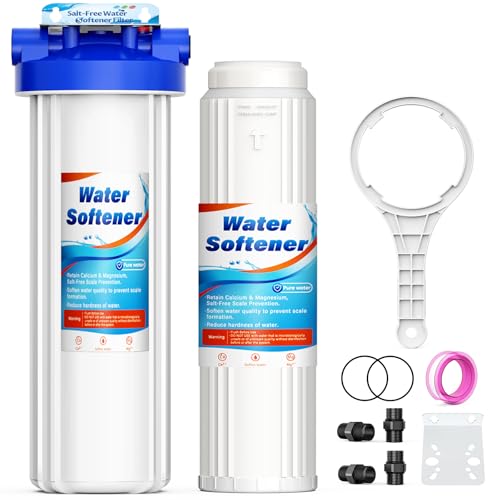
A smaller-footprint system built for tight utility closets, apartments, or cabins where a full-size tank pair will not fit.
🚿 Best High-Capacity System
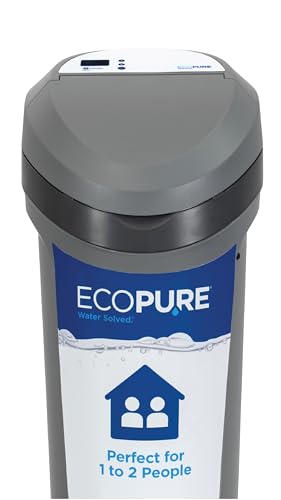
A larger-capacity unit for bigger households or very hard well water, where a standard-size softener would regenerate too often to be practical.

Installation and Upkeep Basics
Most softeners install on the main water line near where it enters the home, ahead of the water heater, and need a drain connection for the regeneration cycle plus a dedicated electrical outlet for the control head. Beyond the install itself, the ongoing task is keeping the brine tank stocked, which is exactly what our water softener salt guide covers, including the difference between pellets, solar salt, and potassium chloride.
Plan on periodic resin checks over the system’s working life, and keep the manufacturer’s manual on hand for regeneration settings, since those settings should be adjusted to your actual hardness number rather than left on a factory default.
Common Mistakes to Avoid
- Guessing at hardness instead of testing it. Grain capacity only means something against a real number. Test first, then size the system to the result.
- Ignoring iron on well water. Standard softening resin fouls quickly when iron is present. Choose an iron-rated unit if your test shows it.
- Skipping the certification check. NSF/ANSI 44 testing is a meaningful signal. Marketing copy alone is not the same thing.
- Forgetting the drain and outlet requirements. Softeners need both. Confirm your install location has them before the unit arrives.
- Treating salt-free as a drop-in substitute. Salt-free conditioners change mineral behavior, they do not remove hardness. Pick the technology that matches what you actually want from your water.
Where to Go From Here
If your well water needs more than softening, our whole house water filter guide covers sediment and taste issues that a softener alone will not solve, and our reverse osmosis system guide covers dedicated drinking water treatment. And if you have not pinned down your hardness number yet, the water test kit guide is the logical first stop.
Frequently Asked Questions
How do I know if I need a water softener? Signs include scale on fixtures and appliances, soap that will not lather well, and film left on dishes or skin. A hardness test confirms it with an actual number rather than guesswork, and our water test kit guide covers how to run one.
What size water softener do I need? Sizing depends on household size and your tested hardness level in grains per gallon. Use the manufacturer’s sizing chart against your own numbers rather than a generic recommendation, since undersizing causes constant regeneration and oversizing wastes salt and water.
Is salt-free water softening as effective as salt-based? They do different jobs. Salt-based systems remove hardness minerals through ion exchange, while salt-free conditioners alter mineral behavior to reduce scale without removing the minerals. Choose based on whether you want the water itself to feel soft or just want to protect pipes and appliances from scale.
Does a water softener remove iron from well water? Standard softening resin is not built for iron and can foul quickly if iron is present in meaningful amounts. Look for a softener explicitly rated for iron reduction, and consider having your water tested by a certified laboratory to confirm the iron level before choosing equipment.
How often does a water softener need maintenance? Expect to restock salt or potassium chloride periodically and check the brine tank for bridging or buildup. Resin has a working life measured in years rather than months, but follow the manufacturer’s guidance for your specific unit and water conditions.
Can I install a water softener myself? Many are designed for DIY installation by someone comfortable with basic plumbing, since they connect to the main line and need a drain and outlet. If you are not confident working on your home’s water line, a licensed plumber is the safer route.
The Bottom Line
The best water softener is the one sized to your actual hardness test and household use, not the biggest tank on the shelf. Salt-based systems remove hardness minerals outright, salt-free conditioners manage scale without added sodium, and well water with iron needs a unit rated for that specific job. Test first, size against real numbers, and check for NSF/ANSI 44 certification before you commit.