Last updated: August 16, 2026
A well pump is the piece of equipment every other part of a private water system depends on, since nothing else works if water is not reaching the house in the first place. The category splits mainly along well depth and type: a submersible pump for deeper wells, a shallow well pump or deep well pump, often sold generically as a jet pump for well use, for shallower ones. Picking the wrong type for your well’s depth is the most common reason a new pump underperforms.
This guide covers how to match a pump to your well’s depth and household demand, what a pressure tank and switch add to the system, and when a problem is worth troubleshooting versus when it is time to call a licensed well contractor.
This article contains affiliate links. If you buy through them, we may earn a commission at no extra cost to you. Learn more.
Quick Answer
Which well pump should you buy?
- For deep wells, a submersible pump rated for your well’s specific depth is the standard, reliable choice.
- For shallow wells, typically under 25 feet, a shallow well jet pump is the usual fit and is generally easier to service since it sits above ground.
- For wells in the medium-depth range, a deep well jet pump or convertible jet pump can bridge the gap, but confirm the manufacturer’s rated depth against your well’s actual measurement first.
Submersible or Jet: Match the Pump to Well Depth
Well depth is the single biggest factor in pump selection, because it decides whether a pump can even physically move water to the surface. Submersible pumps sit down in the well itself and push water up, which lets them handle much deeper wells than a surface-mounted jet pump can manage.
| What to check | Why it matters | What to look for |
|---|---|---|
| Well depth | Determines whether a submersible or jet pump is physically viable | Confirm your well’s actual depth against the manufacturer’s rated range |
| Pump type | Submersible sits in the well, jet pumps sit above ground | Submersible for deep wells, jet pumps for shallow to moderate depths |
| Flow rate (GPM) | Needs to cover peak household demand, not just average use | Check the manufacturer’s rated gallons per minute against your household’s fixture count |
| Horsepower | Affects lift capacity and flow at a given depth | Match the manufacturer’s horsepower recommendation to your well’s depth and casing size |
| Pressure tank pairing | The pump and tank work together to maintain household pressure | Confirm the tank size suits the pump’s flow rate and your household’s usage pattern |
| Electrical requirements | Pumps vary in voltage and wiring needs | Confirm your electrical setup matches before purchase, or plan for an electrician |
Once water pressure and pump questions are settled, water quality is the next layer worth checking. Our water test kit guide covers testing for hardness, iron, and other common well water issues.
Submersible Pumps: The Standard for Deep Wells
Submersible pumps are sealed units lowered into the well casing below the water line, where they push water up rather than pulling it, which is mechanically more efficient over long distances. This makes them the standard choice for deep wells, and their submerged design also means they run quietly since the motor noise stays down in the casing rather than at ground level.
The tradeoff is accessibility. Servicing or replacing a submersible pump means pulling it out of the well, which is a bigger job than working on a surface-mounted unit and is often handled by a licensed well contractor rather than as a DIY project.
Jet Pumps: Simpler Access for Shallow Wells
Jet pumps sit above ground, near the wellhead, and use suction to draw water up through a pipe. Shallow well jet pumps are rated for wells generally under 25 feet, while deep well or convertible jet pumps use a second pipe arrangement to reach somewhat deeper, though still not as deep as a submersible pump can manage.
Because jet pumps sit above ground, they are generally easier to inspect, service, and replace without specialized well equipment, which makes them a common choice for shallow wells where accessibility outweighs the efficiency edge of a submersible unit.
Our Top Picks at a Glance
How we chose: we compared widely available consumer and light-commercial well pumps on depth rating, flow rate, horsepower options, and the patterns that repeat across owner feedback. Selections lean on manufacturer specifications and recurring themes in reviews rather than any hands-on trial of our own.
Confirm your well’s exact depth and required flow rate against the manufacturer’s current specifications before buying, since a mismatch is the most common source of underperformance.
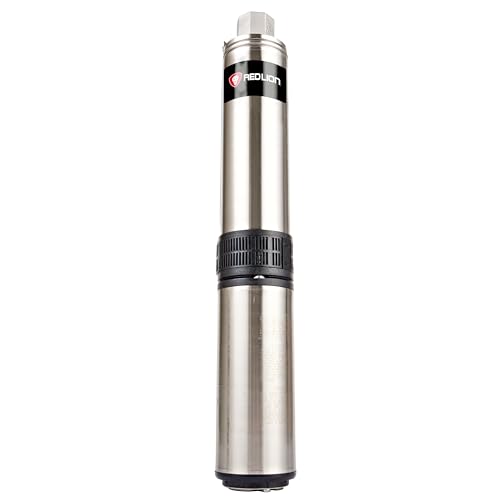
🏆 Best Overall
A submersible pump built for typical residential well depths, with a flow rate that comfortably covers most single-family household demand.
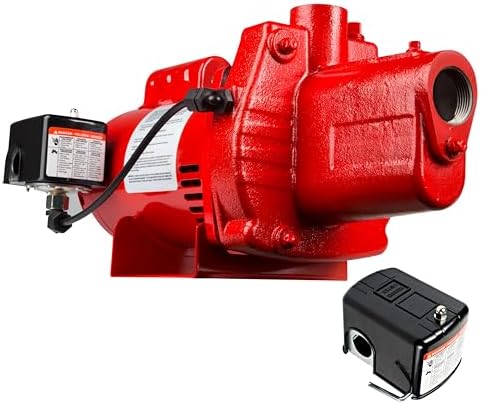
💧 Best for Shallow Wells
A shallow well jet pump suited to wells under the typical depth threshold, with the above-ground accessibility that makes servicing straightforward.
⛰️ Best for Deep Wells
A higher-lift submersible pump rated for deeper well casings, worth checking closely against your well’s exact depth before ordering.

More Picks by Situation
The three picks above cover most residential wells, but a couple of situations call for different equipment.
🔄 Best Convertible Jet Pump
A jet pump that can be configured for either shallow or moderately deep wells, useful if you are unsure which category your well falls into or expect to need flexibility.

⚡ Best Pump Control Box
A control box and capacitor pairing for households replacing failed electrical components rather than the entire pump.

Pressure Tanks, Switches, and Safety
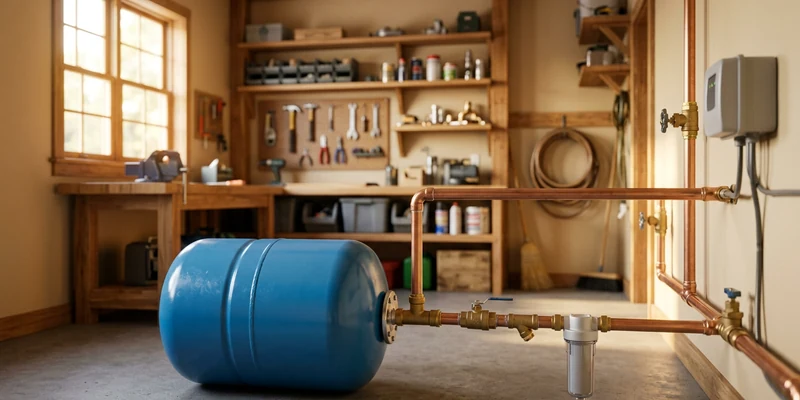
A well pump does not work alone. A pressure tank stores water under pressure so the pump is not cycling on and off with every tap you open, and a pressure switch tells the pump when to start and stop based on tank pressure. Mismatched tank size or a failing switch can cause the pump to short cycle, which shortens its working life.
If your pump is short cycling, losing pressure, or running constantly, that can point to several different causes, from the pressure tank to the switch to the pump itself. For anything beyond checking the obvious, a licensed well contractor can diagnose the actual cause safely rather than guessing at parts to replace, since well electrical work carries real safety risk if handled incorrectly.
Common Mistakes to Avoid
- Guessing at well depth. Confirm the actual depth before choosing between a submersible and jet pump. A mismatch means the pump may not work at all.
- Undersizing flow rate. A pump that cannot cover peak household demand leaves you with weak pressure when multiple fixtures run at once.
- Ignoring the pressure tank and switch. A pump paired with the wrong tank size or a failing switch will short cycle and wear out faster.
- Attempting electrical work without experience. Well pump wiring involves real safety risk. When in doubt, bring in a licensed well contractor.
- Skipping water quality testing. Pump problems and water quality problems are separate issues. Test your water once pressure and flow are sorted.
Where to Go From Here
Once water is reliably reaching the house, water quality is the next step. Our whole house water filter guide covers sediment and taste issues common on private wells, and our water test kit guide covers how to check for hardness, iron, and other contaminants before choosing treatment equipment.
Frequently Asked Questions
How do I know if I need a submersible or jet pump? It comes down to well depth. Submersible pumps handle deep wells, while shallow well jet pumps are generally rated for wells under about 25 feet. Confirm your well’s actual depth before choosing, since the manufacturer’s rated range is not flexible.
What size well pump do I need? Sizing depends on your well’s depth and your household’s peak water demand, measured in gallons per minute. Check the manufacturer’s flow rate and horsepower recommendation against your specific well and fixture count rather than guessing.
Why does my well pump keep short cycling? Short cycling usually points to a pressure tank sized wrong for the pump, a failing pressure switch, or a waterlogged tank. If basic checks do not resolve it, a licensed well contractor can diagnose the specific cause safely.
Can I install a well pump myself? Shallow well jet pumps, which sit above ground, are more approachable for an experienced DIYer. Submersible pumps involve lowering equipment into the well casing and working with well electrical systems, which is safer left to a licensed well contractor.
How long do well pumps typically last? Service life varies with pump type, well conditions, and how well the pressure tank and switch are matched to it. Follow the manufacturer’s guidance for your specific model, and address short cycling promptly since it accelerates wear.
Does a well pump affect water quality? Not directly. A well pump moves water, it does not treat it. Water quality issues like hardness, iron, or bacteria need separate testing and treatment equipment, covered in our water test kit guide.
The Bottom Line
The best well pump is the one matched precisely to your well’s depth and your household’s peak water demand, not the highest horsepower model on the shelf. Submersible pumps handle deep wells efficiently and quietly, jet pumps offer easier above-ground access for shallow wells, and the pressure tank and switch paired with either one matter just as much as the pump itself. When in doubt about depth, electrical work, or a persistent pressure problem, a licensed well contractor is the safer call than guesswork.