Last updated: August 16, 2026
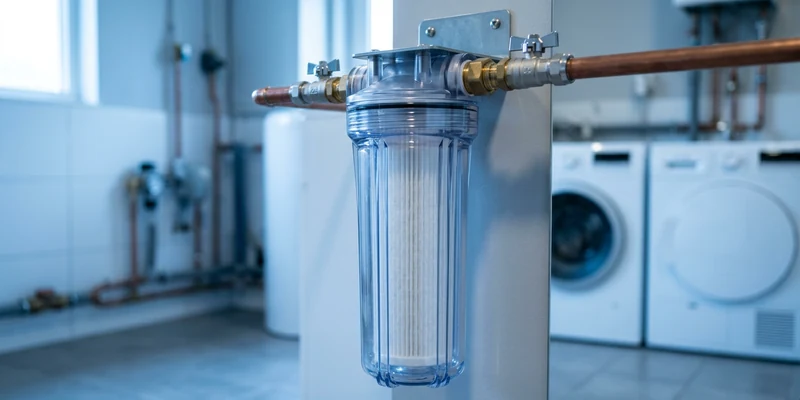
A whole house water filter treats every tap in the home at once, which makes it the go-to fix for well water problems like sediment, rust, chlorine taste, or a faint odor that shows up whether you are washing dishes or filling a glass. The category covers everything from a simple sediment pre-filter to multi-stage carbon systems, and picking the wrong one usually means paying for capacity you do not need or missing the one contaminant you actually wanted gone.
This guide walks through what whole house filters actually remove, how to size one to your household, and why the certification label matters more than the marketing claims stamped next to it. It also points to where a whole house filter stops and other equipment, like a softener or an under-sink reverse osmosis system, needs to pick up the job.
This article contains affiliate links. If you buy through them, we may earn a commission at no extra cost to you. Learn more.
Quick Answer
Which whole house water filter should you buy?
- For general sediment, chlorine taste, and odor, a multi-stage carbon and sediment system covers the most common well and municipal water complaints.
- If your water test shows heavier sediment or rust, start with a dedicated sediment pre-filter housing ahead of any carbon stage to protect it from clogging early.
- For specific contaminants like iron, bacteria, or PFAS, look for a system with a certification that names that exact contaminant, not a general “purifies water” claim.
Sediment, Carbon, or Multi-Stage: What Each Handles
Whole house filters generally combine two or more filtration stages, and knowing what each stage does prevents buying a system that solves the wrong problem. Sediment stages catch particles, carbon stages address taste, odor, and chlorine, and specialty stages target specific contaminants like iron or hydrogen sulfide.
| What to check | Why it matters | What to look for |
|---|---|---|
| Filtration stages | Each stage targets a different category of problem | Sediment plus carbon covers most general well and municipal complaints |
| Certification | NSF/ANSI 42 covers taste and odor, NSF/ANSI 53 covers specific health-related contaminants | Match the certification to the contaminant your test actually found |
| Flow rate | An undersized filter drops household water pressure | Check the manufacturer’s rated flow rate against your household’s peak demand |
| Filter housing size | Bigger housings hold more media and need less frequent changes | Compare housing capacity, not just the box size |
| Cartridge availability | Ongoing replacement cost and access matter more than the sticker price | Confirm replacement cartridges are easy to find before buying the system |
| Bypass valve | Needed to service the unit without shutting off household water entirely | Confirm a bypass valve is included or easy to add |
Not sure what is actually in your water yet? Our water test kit guide covers how to test for sediment, hardness, iron, and other common well water issues before you commit to a filtration setup.
What a Certification Actually Confirms
NSF/ANSI 42 covers aesthetic effects, meaning taste, odor, and chlorine reduction, while NSF/ANSI 53 covers health-related contaminant reduction, meaning things like lead or certain organic compounds. A filter can be certified for one and not the other, and a system that is not certified for a specific contaminant should not be assumed to remove it, regardless of how the packaging is worded.
For any contaminant tied to health, treat the manufacturer’s certification listing as the authority, and confirm it against the NSF or WQA database rather than the box copy alone. If your test results flag something in the more sensitive category, like lead, bacteria, nitrate, or PFAS, follow up with a certified laboratory rather than relying on a filter claim alone, and review current EPA drinking water guidance for that specific contaminant.
Where a Whole House Filter Stops
A whole house filter treats water at the point it enters the home, which is efficient but not unlimited. It generally is not the tool for reducing hardness minerals, which is a job for a water softener, and it is usually not the final step for drinking water purity, where many households add a dedicated reverse osmosis system at the kitchen tap for an extra layer of reduction on what they actually drink.
Two well-known brands, SpringWell and Aquasana, sell whole house systems directly through their own sites and run their own affiliate programs rather than listing primarily on Amazon. They are useful as a comparison point for what a premium, professionally installed system looks like, even though the picks below focus on Amazon-available options most readers can compare side by side.
Our Top Picks at a Glance
How we chose: we compared widely available whole house filtration systems on filtration stages, certification, rated flow rate, and the patterns that repeat across owner feedback. Selections lean on manufacturer specifications and recurring themes in reviews rather than any hands-on trial of our own.
Verify current certification listings directly with the manufacturer before buying, since filter media and tested contaminants can change between product revisions.
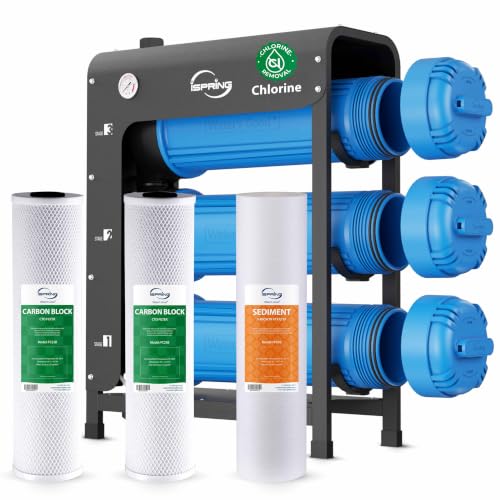
🏆 Best Overall
A multi-stage sediment and carbon system built for whole-home use, sized for typical household flow rates and widely available replacement cartridges.
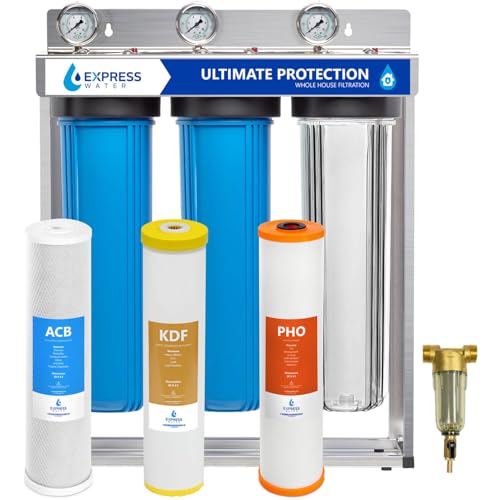
💧 Best Value
A simpler two-stage carbon and sediment system that covers the basics of taste, odor, and particulate reduction at a lower entry cost.
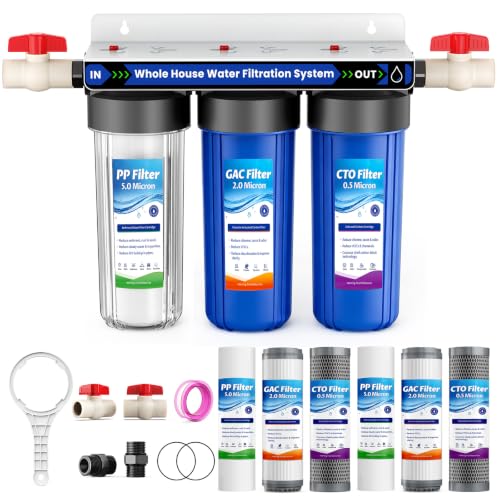
🏗️ Best for Well Water
A heavier-duty system built to handle the higher sediment and mineral load common in private well water, ahead of any softening step.
More Picks by Situation
The three picks above cover most households, but a few specific problems call for a more targeted system.
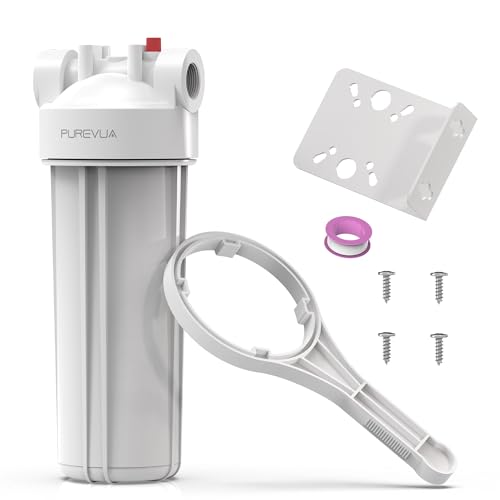
🧱 Best Sediment-Only Pre-Filter
A dedicated sediment filter housing for households that mainly need to catch grit and particulate before it reaches appliances or a downstream carbon stage.
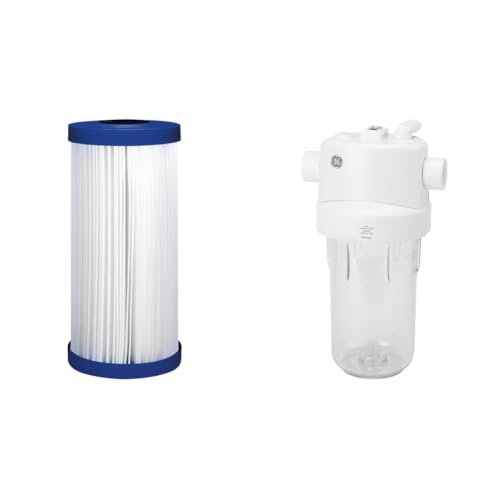
🏢 Best Compact Housing
A smaller-footprint filter housing for tight utility spaces where a full multi-stage cabinet will not fit.
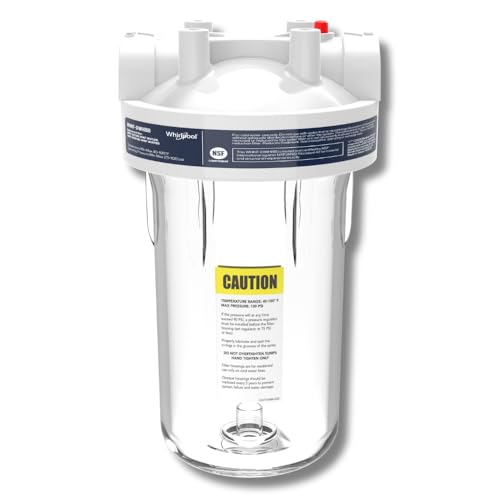
🔧 Best for Easy Cartridge Changes
A twist-and-release housing design that speeds up cartridge swaps, which matters most for households replacing filters on a frequent schedule.
Sizing, Flow Rate, and Cartridge Life
Flow rate is easy to overlook and easy to regret. If the filter’s rated flow rate is lower than your household’s peak demand, running the shower and the dishwasher at once can drop pressure noticeably. Check the manufacturer’s rated gallons per minute against your own household’s typical peak usage before buying, rather than assuming any whole house filter handles any household size.
Water filter cartridge life is stated by the manufacturer and varies with your water quality and household usage, not a fixed calendar number. Heavier sediment or higher usage shortens the interval, so check your specific cartridge’s rating and watch for a pressure drop, which is usually the clearest sign a change is due.
Common Mistakes to Avoid
- Buying without testing first. The right filter depends on what is actually in your water. Test before you shop, not after.
- Assuming any filter removes any contaminant. Check the specific NSF/ANSI certification against the contaminant your test flagged.
- Ignoring flow rate. An undersized filter drops household water pressure, especially with multiple fixtures running at once.
- Skipping the bypass valve. Without one, servicing the filter means shutting off water to the entire house.
- Treating a whole house filter as a softener. Filtration and softening solve different problems. Pair them if your test shows you need both.
Where to Go From Here
If hardness is part of your water’s problem, our water softener guide covers sizing and salt-based versus salt-free technology. For dedicated drinking water treatment beyond what a whole house system provides, see our reverse osmosis system guide. And if your water source is a private well, our well pump guide covers the equipment that gets water into the house in the first place.
Frequently Asked Questions
Do I need a whole house water filter if I have well water? Many well water households benefit from one, since private wells are not subject to municipal treatment and commonly carry sediment, mineral staining, or odor. A water test confirms what your specific well actually needs before you buy equipment.
What is the difference between a whole house filter and a water softener? A whole house filter targets sediment, taste, odor, and specific certified contaminants. A softener specifically addresses hardness minerals through ion exchange. Many well water households eventually use both, since they solve different problems.
How often do whole house filter cartridges need to be replaced? It depends on your household’s water quality and usage, following the manufacturer’s stated interval for that specific cartridge. A noticeable pressure drop is usually the clearest practical sign that a change is due.
Does a whole house filter remove bacteria or make well water safe to drink? Only if the specific system carries a certification naming that exact use. Never assume a filter addresses bacteria, lead, PFAS, or nitrate without checking its certification, and have well water tested by a certified laboratory if any of those are a concern.
Will a whole house filter reduce my water pressure? It can, if the filter’s rated flow rate is lower than your household’s peak demand. Check the manufacturer’s gallons-per-minute rating against your typical usage, especially in larger households running multiple fixtures at once.
Where should a whole house filter be installed? Typically at the point where the main water line enters the home, ahead of the water heater and any softener. Follow the manufacturer’s installation guidance for exact placement and required clearance for cartridge changes.
The Bottom Line
The best whole house water filter is the one matched to what your water test actually found, not the system with the most filtration stages listed on the box. Sediment and carbon cover most general complaints, while specific contaminants need a system certified for that exact issue. Check the flow rate against your household’s needs, confirm certification through the NSF or WQA database, and treat testing as the first step rather than an afterthought.