Last updated: August 16, 2026
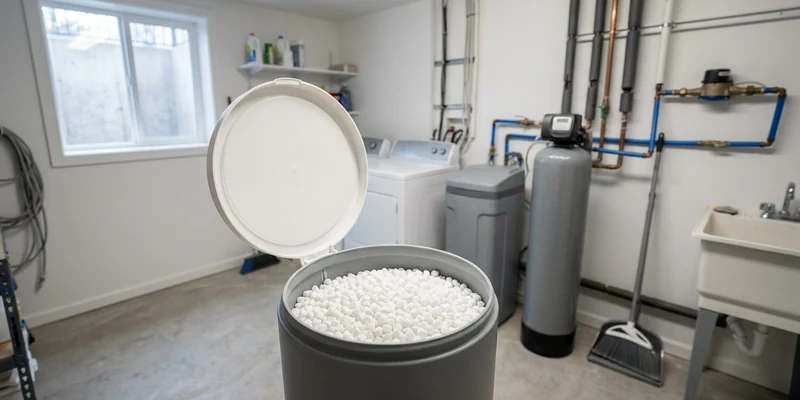
Once a water softener is installed, the recurring question stops being about the machine and starts being about the bag you keep hauling to the brine tank. Water softener salt looks like a simple commodity until you notice the shelf has rock salt, solar salt, evaporated pellets, and potassium chloride sitting side by side, each with a different purity level and a different effect on your softener’s resin over time.
This guide breaks down what actually separates one bag of softener salt from another, which types suit which softeners, and the maintenance habits that keep a brine tank from turning into a bigger problem than the hardness it is meant to solve.
This article contains affiliate links. If you buy through them, we may earn a commission at no extra cost to you. Learn more.
Quick Answer
Which water softener salt should you buy?
- For most standard softeners, evaporated salt pellets offer the highest purity and leave the least residue in the brine tank.
- Solar salt pellets or crystals are a solid, more affordable middle ground for households without unusually hard water.
- If sodium intake is a concern, potassium chloride softens the same way but costs more and needs a control head adjustment to work correctly.
Rock, Solar, Pellet, or Potassium: What Actually Differs
All four common salt types regenerate softener resin the same way, but they differ in purity, how much residue they leave behind, and how quickly they dissolve. Purity matters more than price tag suggests, because low-purity salt builds up sediment at the bottom of the brine tank, which eventually forces a cleaning that pure pellets mostly avoid.
| What to check | Why it matters | What to look for |
|---|---|---|
| Purity level | Low-purity salt leaves insoluble residue in the brine tank | Evaporated pellets are generally the purest common option |
| Salt form | Pellets, crystals, and blocks dissolve at different rates | Match the form your specific softener’s manual recommends |
| Bridging risk | A hardened salt crust can form above the water line, faking a full tank | Pellets that resist bridging reduce this maintenance headache |
| Sodium versus potassium | Potassium chloride softens water without adding sodium | Confirm your control head supports a potassium salt setting |
| Additives | Some bags include rust-removing or resin-cleaning additives | Useful for well water with iron, unnecessary for plain municipal hardness |
| Storage conditions | Moisture clumps salt before it ever reaches the tank | Keep bags sealed and off a damp floor |
If you have not confirmed your softener actually needs this level of purity, our water softener guide covers how grain capacity and resin type factor into the decision before salt ever enters the picture.
Evaporated Pellets: The Default Recommendation
Evaporated salt pellets go through a purification process that removes most of the impurities found in mined rock salt, which is why most softener manufacturers list them as the preferred choice in their manuals. The tradeoff is a higher price per bag, though the reduced brine tank cleaning and lower bridging risk generally offset that over the life of the softener.
Solar salt, made by evaporating seawater or brine in open ponds, sits in the middle. It costs less than pellets and works fine for average hardness levels, but it dissolves less consistently and leaves more sediment than evaporated pellets over time.
Rock Salt and Potassium Chloride: The Two Extremes
Rock salt is the least refined and least expensive option, mined directly rather than evaporated, and it leaves noticeably more residue in the tank. It works, but expect more frequent brine tank cleaning if you use it regularly, and check your manufacturer’s manual since some softener models specifically advise against it.
Potassium chloride softens water through the same ion exchange mechanism as sodium-based salt, without adding sodium to the treated water. It typically costs more per bag and dissolves differently, so most manufacturers recommend adjusting the control head settings when switching to it. Households managing sodium intake for medical reasons should discuss any household water changes with their physician rather than treating this as medical advice.
Our Top Picks at a Glance
How we chose: we compared widely available water softener salt products on purity, form, bridging resistance, and the patterns that repeat across owner feedback. Selections lean on manufacturer specifications and recurring themes in reviews rather than any hands-on trial of our own.
Check your softener’s manual before buying, since some control heads and resin types are matched to a specific salt form.
🏆 Best Overall
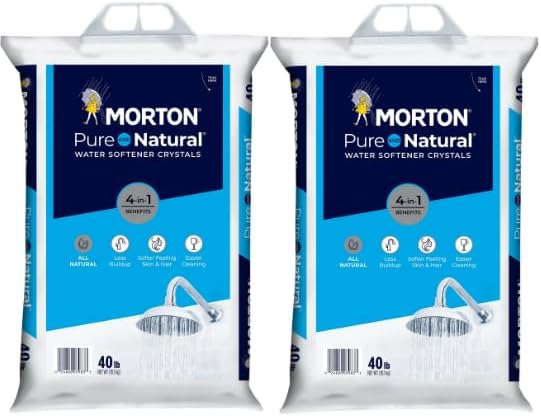
High-purity evaporated salt pellets that suit the vast majority of standard softeners and leave minimal tank residue.

💧 Best Value
Solar salt pellets that cost less per bag while still handling average household hardness reliably.

🧴 Best for Sodium-Conscious Households
Potassium chloride pellets for households that want to soften water without adding sodium, once the control head is set to match.

More Picks by Situation
The three picks above cover most buyers, but a couple of situations call for a more specific product.
🛢️ Best for Well Water with Iron
A rust-removing salt blend designed to help clean iron deposits from resin, useful for well water households dealing with iron alongside hardness.

🧊 Best Budget Option
Standard rock salt crystals for households on a tight maintenance schedule who do not mind more frequent brine tank cleaning.
Keeping the Brine Tank Trouble-Free
Check the brine tank monthly rather than waiting until the softener stops regenerating properly. Salt bridging, where a hardened crust forms above the water line and traps empty space underneath, is the most common issue, and it fools owners into thinking the tank is full when it is not.
If you notice a hard crust, break it up carefully rather than adding more salt on top of it. Keep bags stored somewhere dry, since humidity is the main driver of clumping before the salt even reaches the tank, and follow your specific softener’s manual for how full the brine tank should be kept.
Common Mistakes to Avoid
- Letting the tank run empty. An empty brine tank means the softener cannot regenerate, and hard water starts flowing again without warning.
- Mixing salt types without checking compatibility. Some manufacturers advise against certain combinations. Check the manual first.
- Ignoring salt bridging. A crusted-over tank can look full while doing nothing. Check periodically, not just when problems appear.
- Switching to potassium chloride without adjusting settings. It dissolves differently than sodium-based salt, and most control heads need a setting change to compensate.
- Using rock salt in a softener the manual advises against. Confirm your specific model’s tolerance before defaulting to the cheapest bag.
Where to Go From Here
If you are still choosing a softener rather than maintaining one, start with our water softener guide, which covers sizing, technology, and certification. And if hardness is only part of the story on your well water, our whole house water filter guide covers the sediment and taste issues a softener does not address.
Frequently Asked Questions
How much water softener salt do I need each month? Usage depends on household size, water hardness, and how often the softener regenerates. Check the brine tank regularly rather than relying on a fixed schedule, since actual use varies by season and household habits.
Is water softener salt the same as table salt? No. Softener salt is sold at a much higher purity and in forms, like pellets or crystals, designed for brine tanks. Table salt is not a substitute and can introduce impurities the softener is not designed to handle.
Can I use potassium chloride in any water softener? Most standard softeners can use potassium chloride, but check your manufacturer’s manual first, since some control heads need a setting adjustment for the different dissolve rate, and cost per bag is typically higher than sodium-based salt.
What causes salt bridging in a brine tank? Humidity and temperature swings inside the tank can cause salt to fuse into a hard crust above the water line. This traps an air gap underneath that looks like a full tank but is not, so the softener stops regenerating correctly.
Does the type of salt affect how well the softener works? All common salt types regenerate resin through the same ion exchange process, so softening performance itself does not change much. What changes is purity, residue left in the tank, and long-term maintenance needs.
How do I know if my brine tank needs cleaning? Visible sediment at the bottom of the tank, a hardened salt crust, or a softener that is not regenerating properly are all signs. Evaporated pellets generally reduce how often this cleaning is needed compared to rock salt.
The Bottom Line
The best water softener salt for most households is a high-purity evaporated pellet, since it leaves the least residue and resists bridging better than rock or solar salt. Solar salt is a reasonable, lower-cost alternative for average hardness, and potassium chloride is worth the extra cost if avoiding added sodium matters to your household. Whichever type you choose, check your softener’s manual and keep the brine tank monitored rather than treating it as a set-and-forget appliance.