
Last updated: August 16, 2026
Water test strips promise an answer in seconds, dip a strip, match a color, and you know what is in your water. A certified lab test takes longer and asks more of you, a proper sample, careful shipping, a wait for results. The two methods are not competing for the same job, and mixing them up is one of the more common mistakes well owners make.
This guide compares water test strips and a lab test side by side: what each one is actually built to measure, where a strip is genuinely good enough, and where only a certified laboratory result should be trusted. Neither replaces guidance from your local health department once a result raises a real concern.
Quick Answer
Water test strips or a lab test, which do you need?
- For hardness, pH, or a fast general screen, water test strips are fine and give a reading in minutes.
- For anything health related, including bacteria, nitrate, lead, arsenic, or PFAS, only a certified laboratory result should be treated as confirmed.
- A strip can flag that something might be worth a closer look, but it should never be the final word on a contaminant with real stakes.
Water Test Strips vs. a Lab Test at a Glance
The table below lines up water test strips against a certified laboratory test on the factors that actually matter for well owners deciding between them.
| Factor | Water test strips | Certified lab test |
|---|---|---|
| Speed | Minutes | Days to about two weeks, depending on the lab and panel |
| Precision | Rough, color-match reading | Confirmed numeric value with a documented method |
| Best suited for | Hardness, pH, chlorine, general screening | Bacteria, nitrate, lead, arsenic, PFAS, and other regulated contaminants |
| Documentation | Not typically accepted for legal or real estate purposes | Written report often required for closings, permits, and health department follow-up |
What Water Test Strips Are Actually Built to Do
A water test kit built around strips uses a chemical reagent embedded in the paper that changes color based on the concentration of whatever it is designed to detect. You compare that color to a printed chart, which is fast but inherently approximate, since lighting, timing, and how carefully you read the chart all affect the result.
This makes strips a reasonable tool for parameters where a rough number is genuinely useful, like sizing a water softener based on hardness or tracking pH over time. It is a poor fit for anything where the difference between a safe and concerning reading is a small, precise number, which describes most of the health regulated contaminants covered later in this guide.

Where a Lab Test Does What a Strip Cannot
A certified laboratory uses instrumentation and standardized methods that a home strip simply cannot replicate, which is why lab results are treated as the confirmed answer for coliform bacteria, nitrate, lead, arsenic, and PFAS. These are also the parameters with EPA reference numbers behind them, and comparing a lab result to those numbers is far more meaningful than comparing a color chart to a guess.
The tradeoff is time and process. A lab test means following specific sample collection instructions, sometimes involving a sterile bottle or precise fill line, then shipping or dropping off the sample and waiting for a written report. That extra step is exactly why the result carries more weight.
When a Strip Is a Reasonable First Step, Not a Final Answer
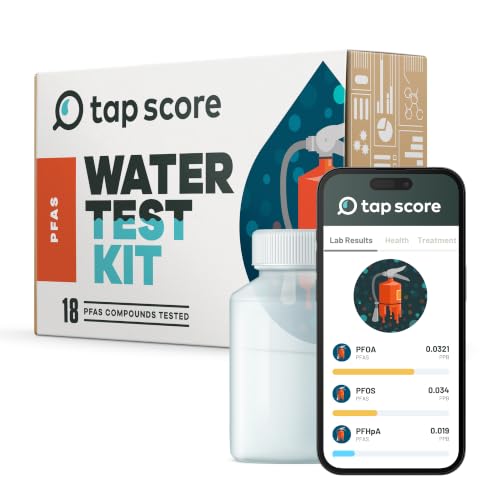
Some home kits include a strip or reagent for a health-sensitive parameter, like a lead screening pad, marketed as a quick check. Treat any such result as a first flag rather than a final answer. If a home screening test raises a concern, a certified laboratory confirmation is the next step, not a decision to treat or ignore the issue based on the home reading alone.
This distinction matters most for parameters like nitrate and bacteria in well water, where a false sense of reassurance from a rough strip reading could delay a test that actually confirms the water’s condition. When in doubt, treat the strip as a screening tool and the lab as the record of truth.
The same caution applies in the other direction. A strip that flags a possible issue is not proof of a problem either, since color-match tests are prone to both false positives and false negatives depending on handling, lighting, and how long you wait before reading the result. Either outcome, a surprising positive or a reassuring negative, is a reason to confirm with a certified lab if the parameter in question is one with real health stakes.
Choosing Based on What You Are Actually Testing For
The right choice comes down to what you are checking. If you are deciding whether your water is hard enough to justify a softener, or tracking pH after installing new equipment, a water test kit with strips answers that question well enough on its own. If you are asking whether your water is contaminated with something that could carry real risk, a well water test kit from a certified lab, not a strip, is the appropriate route.
Many well owners end up using both: strips for routine, low-stakes monitoring between the annual and multi year lab panels that cover the parameters where precision actually matters.
Think of it as two different tools for two different jobs rather than one being a cheaper substitute for the other. A well water test kit with strips is closer to a quick walk-through inspection, fast and good enough for routine checks, while a certified laboratory result is closer to a formal, documented inspection report, slower to produce but built to be trusted when the stakes are higher.
Common Mistakes When Choosing Between the Two
- Using a strip result to rule out a health-related contaminant. A clean-looking strip reading does not confirm bacteria, nitrate, lead, or PFAS are absent.
- Assuming a well water test kit always includes a lab option. Some kits are strips only; check what is actually included before you buy.
- Reading a strip under poor lighting or after the recommended wait time. Both distort the color match and can produce a misleading result.
- Using expired strips. Like most reagent-based products, accuracy can degrade past the expiration date.
- Sending a casual sample to a lab without following collection instructions. Improper technique can invalidate an otherwise appropriate test method.
- Choosing based on speed alone. A fast answer is only useful if it is accurate enough for what you are actually trying to find out.
Frequently Asked Questions
Are water test strips accurate enough for well water? They are accurate enough for hardness, pH, and general screening, but not precise enough to confirm health regulated contaminants like bacteria, nitrate, lead, or PFAS.
Can I use a water test kit instead of a certified lab for a real estate closing? Most closings and permits that require water testing specify a certified laboratory result, not a home strip reading, so check with the parties involved before relying on a kit.
Why does a well water test kit sometimes include both strips and a mail-in option? Combination kits let you screen quickly at home with strips and send a sample to a lab for anything the strip flags or cannot cover, which is a practical middle ground.
Is a positive result on a strip definitely accurate? Not necessarily. Strips can give false positives or false negatives depending on handling, so a concerning strip result should be confirmed with a certified laboratory test before you act on it.
How much faster is a strip compared to a lab test? A strip gives a reading in minutes, while a certified lab panel typically takes anywhere from a few days to about two weeks depending on the lab and what is being tested.
Do strips expire or lose accuracy over time? Yes, like most reagent based products, strips can degrade with age or improper storage, so check the expiration date before relying on an older kit.
The Bottom Line
Water test strips and a lab test are not interchangeable, they answer different questions. Strips are fast and good enough for hardness, pH, and general screening, while a certified lab test is the only appropriate route for bacteria, nitrate, lead, arsenic, and PFAS. Use a strip to screen and a lab to confirm, and treat any concerning result, from either method, as a reason to contact your local health department.