Last updated: August 16, 2026
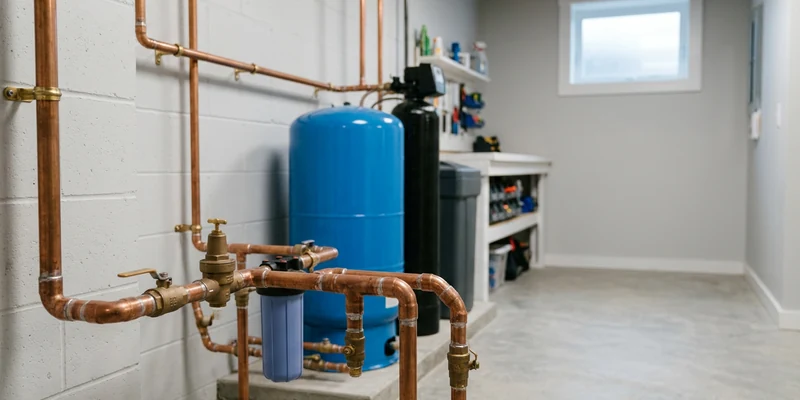
A well water system is a small, private utility that a household owns and maintains instead of relying on a city main out front. Where a municipal hookup ends at a meter, a well water system starts underground, at the aquifer, and includes every part between that water source and the tap: the well itself, the pump, a pressure tank, a switch, and the wiring and piping that tie them together.
Understanding how does a well pump work within that larger system makes it much easier to figure out which part is involved when something changes, a drop in pressure, a pump that will not stop running, or water that looks or tastes different. This guide maps out each component in order, then points to a deeper guide for anything worth a closer look.
Quick Answer
How does a well water system work?
- A pump, either down in the well or mounted above ground, draws groundwater from the well casing and pushes it toward the house.
- A well pressure tank stores that water under pressure so the pump is not switching on every time a faucet opens, and a pressure switch tells the pump when to start and stop.
- From there, water may pass through treatment equipment such as filters or a softener before it reaches any tap, with the well itself and the wiring to the pump best left to a licensed well or pump professional.
The Well Water System at a Glance
Each part of a well water system has one job, and most troubleshooting starts by figuring out which part is behaving differently than usual.
| Component | What it does | What changes if it fails |
|---|---|---|
| Well casing and cap | Lines the borehole and seals the top against surface water and debris | A failed cap or seal can let contamination reach the water |
| Pump (submersible or jet) | Draws water from the well and pushes it toward the house | No water at all, or a pump that runs but delivers little flow |
| Well pressure tank | Stores pressurized water so the pump is not cycling constantly | Frequent on and off cycling, or pressure that swings noticeably |
| Pressure switch | Turns the pump on and off based on tank pressure | Pump that will not start, will not stop, or cycles too often |
| Wiring and piping | Carries power to the pump and water to the house | Electrical faults or leaks, both jobs for a licensed professional |
| Treatment equipment | Filters, softens, or otherwise treats water after the pressure tank | Taste, staining, or hardness issues rather than pressure problems |
For a closer look at picking the right equipment, our well pump buying guide covers how pump type and household demand line up.
Where the Water Starts: The Well Itself
A well is a borehole drilled or dug down to an aquifer, a layer of saturated soil or rock that holds groundwater. A casing, usually steel or PVC pipe, lines the hole to keep the sides from collapsing and to keep surface runoff, insects, and debris out of the water supply. At the top, a well cap seals the casing while still allowing the system to vent properly.
How deep that casing goes and how far below the surface the water sits, known as the static water level, both shape which type of pump the well needs. Those specifics are worth confirming directly rather than guessing, since a well’s paperwork or a licensed well contractor can usually provide the actual depth on record.
The Pump: Moving Water From the Well to the House
Two main pump types cover most residential wells. A submersible pump sits down in the well itself, below the water line, and pushes water up, which suits deeper wells well. A jet pump sits above ground near the wellhead and uses suction to draw water up, which works for shallower wells and is generally easier to access for service.
Matching pump type to well depth and household demand is its own topic with real tradeoffs, covered in detail in our well pump buying guide. For this overview, the key point is simply that the pump is the only component actually moving water, everything downstream of it manages pressure or treats the water after the fact.
The Well Pressure Tank and Switch: Keeping Pressure Steady
Without a well pressure tank, the pump would need to start every time a faucet opened anywhere in the house, which would wear it out quickly. Instead, the tank stores a reserve of pressurized water behind an internal air bladder, and the pump only kicks in once that reserve drops to a set low point.
The well pressure switch is what actually tells the pump when to start and stop, based on readings from the tank. Together, the tank and switch are responsible for most of the day to day pressure behavior a household notices, and they are also where a lot of pressure complaints trace back to. Our guides to the well pressure tank and pressure switch settings go into how each one actually works.
Wiring, Piping, and the Parts You Should Not Troubleshoot Alone
A buried supply line runs from the well to the house, and a separate electrical line powers the pump, often running down into the well itself for a submersible unit. Both carry real safety considerations: water and electricity together are dangerous, and the well is also the household’s drinking water source, so anything involving the wiring or the well interior is well suited to a licensed well or pump professional rather than a homeowner project.
This is also where pump repair searches online tend to mix serious guidance with local plumbing companies angling for a service call. Treat any online instructions for opening the well cap, handling submersible wiring, or working inside the casing as background reading, not a how-to.
After the Pressure Tank: Treatment Equipment
Once water is reliably reaching the house at steady pressure, treatment equipment such as sediment filters, whole house filters, or a softener typically sits further along the line, addressing taste, staining, or hardness rather than pressure. Those are separate systems from the well and pump, and a pressure problem is rarely fixed by adjusting a filter or softener.
It is worth testing water quality on its own schedule regardless of how the pressure side of the system is performing, since the two are related but independent concerns. Our well water testing guide covers what to test for and how often.
Common Mistakes to Avoid
- Assuming every symptom points to the pump. Pressure tanks and switches cause a large share of the complaints that get blamed on a failing pump.
- Ignoring the well cap and casing. A damaged or poorly sealed cap is a water quality risk, not just a cosmetic issue.
- Mixing up pressure problems with water quality problems. A well water system handles both, but they usually have separate causes and separate fixes.
- Skipping professional help for wiring or in-well work. The combination of electricity and drinking water is not a place to guess.
- Forgetting that treatment equipment sits downstream. A softener or filter will not resolve a pressure or cycling issue upstream of it.
Frequently Asked Questions
What are the main parts of a well water system? The well and casing, a pump (submersible or jet), a well pressure tank, a pressure switch, supply piping and pump wiring, and any treatment equipment installed after the tank.
How does a well pump work with the pressure tank? The pump fills the tank until the pressure switch senses the tank has reached its cutoff point, then stops. The tank supplies water on its own until pressure drops enough for the switch to start the pump again.
Do all well water systems have a pressure tank? Nearly all residential systems use one, since it prevents the pump from starting every time a fixture is used and helps maintain steadier household pressure.
How do I know if my problem is the pump or the pressure tank? Frequent cycling, pressure swings, or a pump that will not stop often trace back to the tank or switch rather than the pump itself; our guides to short cycling and a pump that will not shut off walk through the difference.
Can I work on my own well pump or wiring? Anything involving the electrical connection to the pump or work inside the well casing carries real safety risk and is best handled by a licensed well or pump professional.
Does treatment equipment affect my well water system’s pressure? Filters and softeners can restrict flow if they are overdue for a change or improperly sized, but they are separate from the pump, tank, and switch that primarily control pressure.
The Bottom Line
A well water system is really a short chain of components, the well and casing, a pump, a pressure tank, a switch, and the wiring and piping connecting them, each with one specific job. Most pressure or cycling complaints trace back to the tank or switch rather than the pump itself, while water quality issues sit downstream with treatment equipment. Anything involving wiring or the inside of the well is worth handing to a licensed well or pump professional rather than troubleshooting alone.