Last updated: August 16, 2026
A salt free water softener promises a lot in its name, no salt bags, no brine tank, no drain connection, but it does not work the same way a conventional softener does, and it is worth understanding that difference before you buy one expecting identical results.
This guide explains the technology behind salt-free conditioning, what actually changes in your water versus what does not, and where certification currently stands for these systems compared to traditional salt-based softeners.
This article contains affiliate links. If you buy through them, we may earn a commission at no extra cost to you. Learn more.
Quick Answer
How does a salt free water softener actually work?
- Most salt-free systems use template assisted crystallization (TAC) media, which converts dissolved calcium and magnesium into microscopic crystals that resist sticking to surfaces.
- The minerals stay in the water rather than being removed, so a hardness test will still show the same reading after treatment.
- Because there is no ion exchange, these systems add no sodium, need no drain connection, and use no salt.
Salt-Based Softener vs Salt-Free Conditioner
These two technologies solve a similar problem, scale, in fundamentally different ways. Use this table to see where they actually diverge.
| Factor | Salt-based softener | Salt-free conditioner |
|---|---|---|
| Mechanism | Ion exchange, removes hardness minerals | Template assisted crystallization, alters mineral behavior |
| Hardness test after treatment | Reads lower, minerals are removed | Reads the same, minerals stay in the water |
| Sodium added | Yes, as part of the exchange process | No sodium added |
| Drain connection needed | Yes, for regeneration | No |
| Recognized certification | NSF/ANSI 44 for softener performance | No equivalent third-party performance certification widely applied across the category |
The TAC Process: Crystals Instead of Removal
Template assisted crystallization media works by giving dissolved calcium and magnesium a surface to crystallize onto as water flows past. Instead of being pulled out of the water the way ion exchange resin removes them, the minerals form tiny, stable crystals that stay suspended in the water rather than bonding to pipes, fixtures, and appliance surfaces. Since the minerals are still present, just restructured, this is generally described as scale reduction or conditioning rather than softening in the traditional sense. The distinction in terminology is not just marketing language, it reflects a genuinely different mechanism from the ion exchange process a salt-based softener relies on.
Some salt-free systems use other approaches, including catalytic or electronic descaling methods, but TAC is the most commonly used media in mainstream consumer salt-free conditioners sold today.
What Changes and What Doesn’t
The practical result many households notice is less new scale forming on fixtures, water heaters, and glassware over time, since the crystallized minerals are less likely to adhere to surfaces. What does not change is your water’s hardness reading, calcium and magnesium are still dissolved in the water, so a strip or lab test will show the same grains per gallon before and after a salt-free system.
That distinction matters for expectations. If your goal is water that tests as soft, or that feels noticeably different for skin, hair, or soap lathering the way ion exchange softened water does, a salt-free conditioner is not built to deliver that, since it manages scale behavior rather than removing hardness minerals from the water itself.
Where Certification Stands Today
NSF/ANSI 44 is a well established, widely recognized standard specifically for testing salt-based softener performance. Salt-free and TAC-based scale reduction systems do not currently have an equivalent standard applied consistently across the category the way NSF/ANSI 44 applies to softeners, in part because independently verifying scale-prevention performance is harder to standardize than measuring hardness removal directly.
That does not mean every salt-free product is unproven, manufacturers often publish their own third-party lab testing for scale reduction performance, but it does mean buyers should look specifically at what testing a given product actually cites rather than assuming a blanket certification exists across the whole category the way it does for salt-based units.
Who Actually Wants a Salt-Free System
Salt-free conditioners tend to appeal to households that want to reduce scale without adding sodium to their water, do not have convenient drain access for a regeneration cycle, or live in an area with local restrictions on brine discharge from self-regenerating softeners. Renters and households in smaller spaces also sometimes prefer the simpler installation, which our water softener installation guide covers in more detail alongside what a conventional softener install requires by comparison.
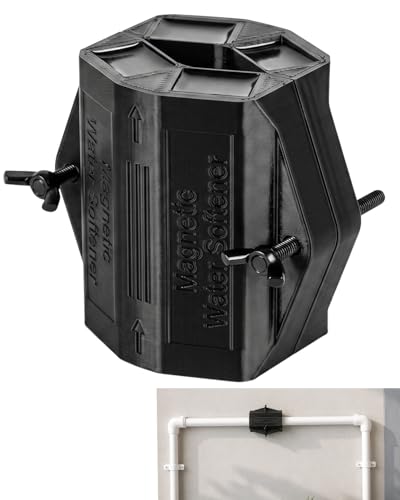
A salt-free, no-installation unit built around TAC media is a reasonable starting point if your priority is scale reduction without the drain and outlet requirements of a full softener setup.
Two well known brands, SpringWell and Aquasana, also sell salt-free and salt-based systems directly through their own websites rather than through third-party marketplaces, and both are worth knowing about as a comparison point even though this guide focuses on the more widely available consumer category.
Maintenance Looks Different Too
Because there is no brine tank or resin regeneration cycle, salt-free systems skip several of the recurring tasks that come with a conventional softener: no salt to buy or restock, no salt bridge to watch for, and no drain line to maintain. That is part of the appeal for households that want lower ongoing upkeep.
What salt-free systems do still need is periodic replacement of the TAC or catalytic media itself, along with any pre-filter stage many units include to protect that media from sediment. Manufacturer guidance is the right source for how often the media needs replacing, since it depends on water conditions and usage rather than a fixed universal number.
Common Mistakes to Avoid
- Expecting a lower hardness reading after installing a salt-free system. The minerals stay in the water, so the number on a test does not change.
- Assuming NSF certification exists the way it does for salt-based softeners. Check what specific testing a product actually cites rather than assuming a blanket standard.
- Choosing salt-free purely for cost without weighing what it does not do. It manages scale, it does not soften water the way ion exchange does.
- Ignoring local rules on softener discharge before assuming you need to switch. Some areas restrict self-regenerating softeners specifically, which is worth checking before buying either type.
- Overlooking sodium concerns as a reason to switch without checking the numbers. If sodium is the main concern, compare it directly against potassium chloride as an alternative for a salt-based system too.
Frequently Asked Questions
Does a salt free water softener actually work? It works differently than a salt-based softener. TAC-based systems reduce scale formation by crystallizing minerals rather than removing them, which many households find effective for scale, though it will not lower a hardness test reading.
Is a salt free water conditioner the same as a water softener? Not technically. A true softener removes hardness minerals through ion exchange, while a salt-free conditioner alters how those minerals behave without removing them.
Does a salt-free system need a drain or electricity? No drain connection is needed since there is no regeneration cycle. Some systems are fully passive, while others may need minimal power depending on the specific model.
Will a salt-free conditioner lower my water hardness number? No. Hardness minerals remain dissolved in the water, so a test will show essentially the same reading before and after treatment.
Are salt-free water softeners NSF certified? Salt-based softeners are commonly certified to NSF/ANSI 44. Salt-free, TAC-based systems generally do not carry an equivalent widely applied third-party performance certification, so check what specific testing a given manufacturer cites.
Who should choose salt-free over salt-based softening? Households that want to avoid added sodium, lack convenient drain access, or live somewhere that restricts brine discharge from self-regenerating softeners are the most common candidates.
The Bottom Line
A salt free water softener typically uses template assisted crystallization to keep hardness minerals from sticking to surfaces, rather than removing them from the water the way ion exchange does. That means no salt, no drain connection, and no added sodium, but also no change in your actual hardness test reading. Choosing between salt-based and salt-free comes down to whether your priority is scale reduction or genuinely softer water, plus practical factors like drain access and local discharge rules.